
Last updated November 15, 2026
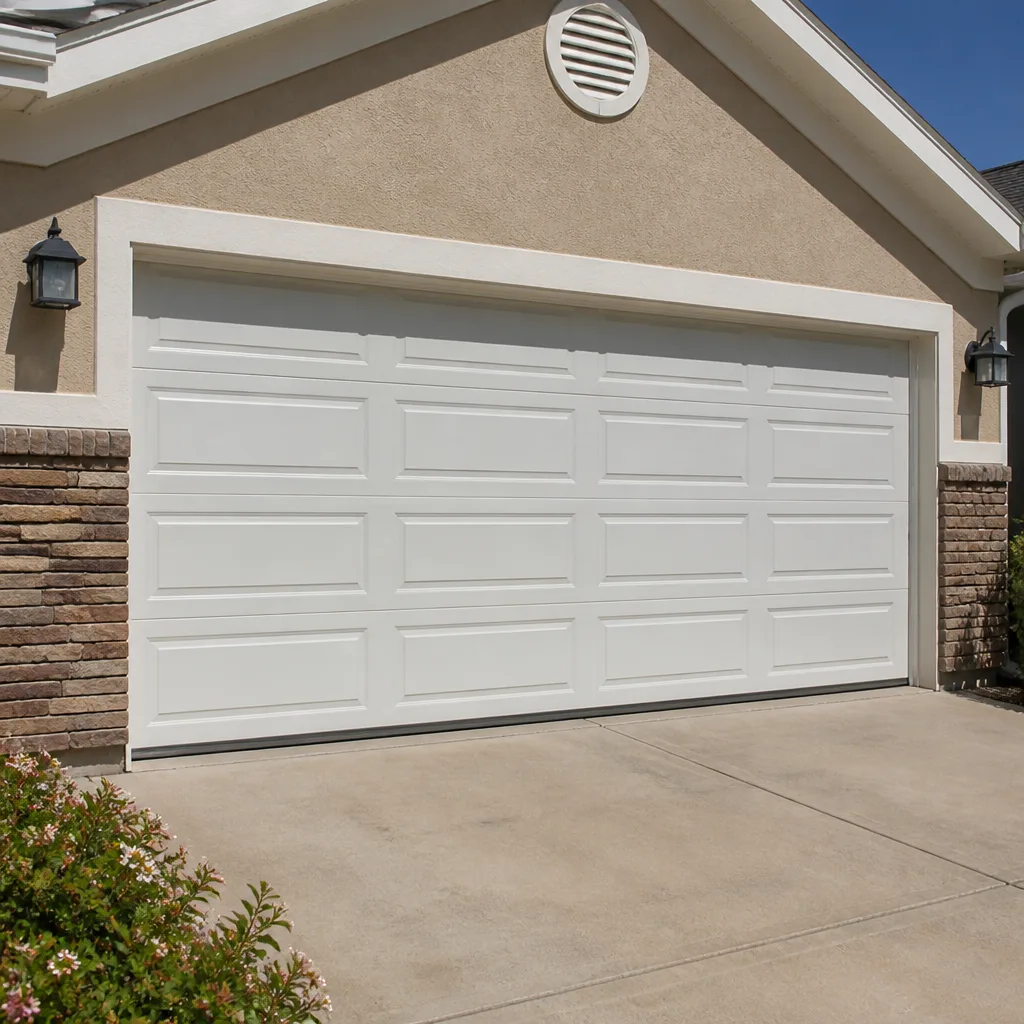 Raised-panel steel
 Carriage house
 Modern flush
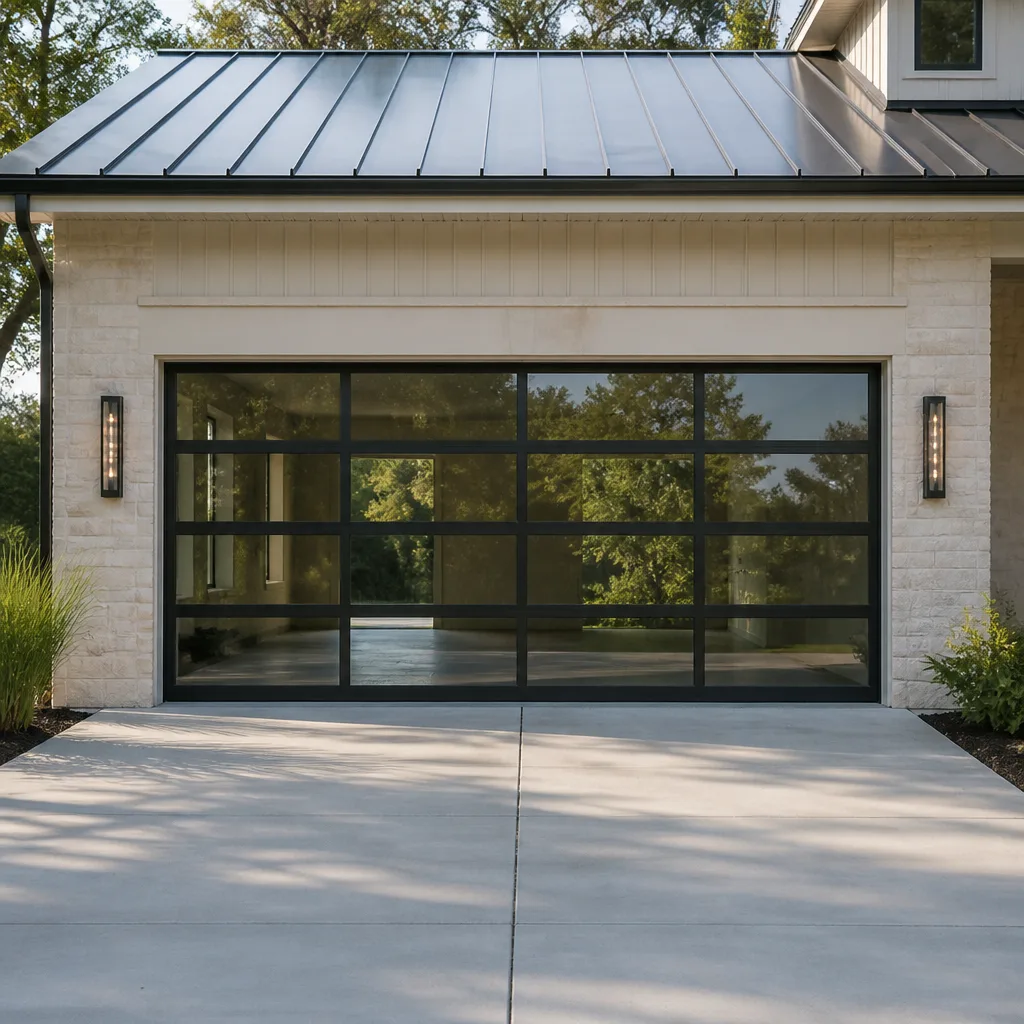 Full-view glass
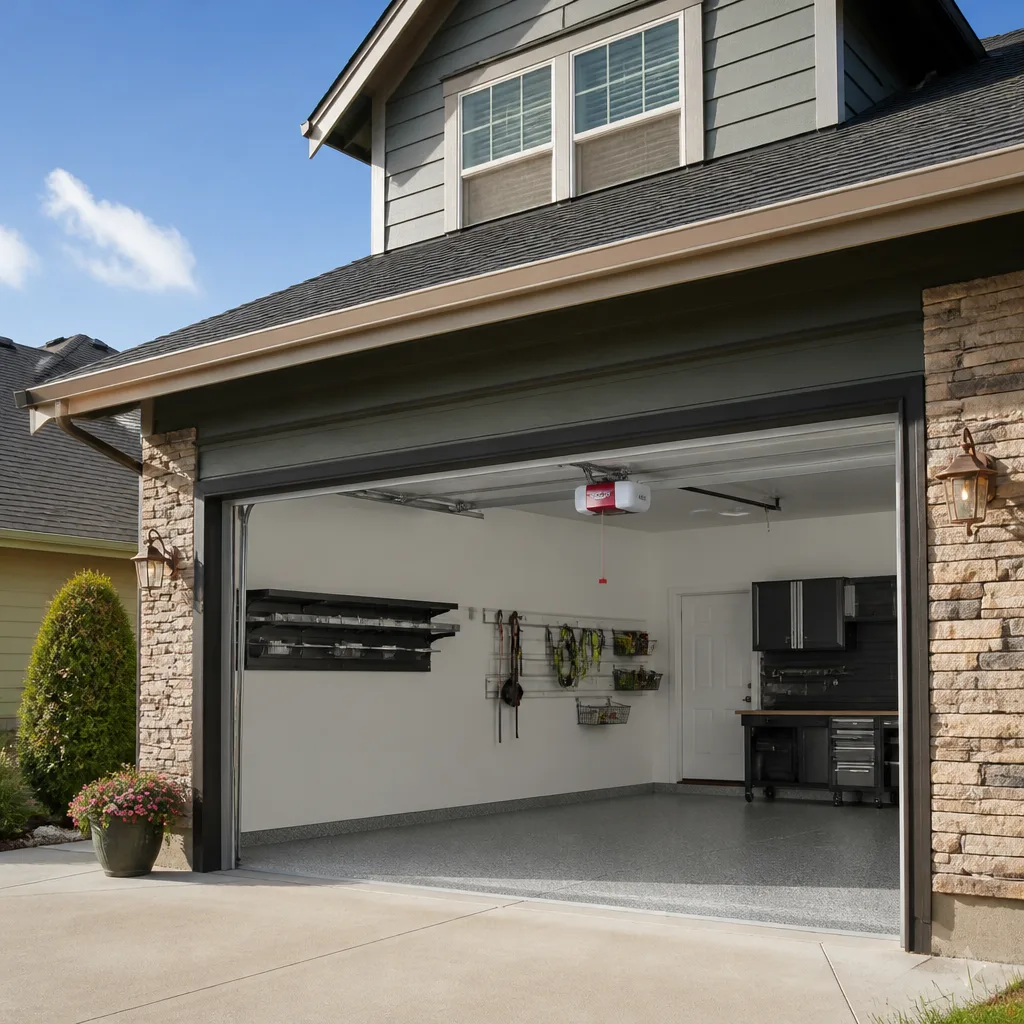 LiftMaster openers
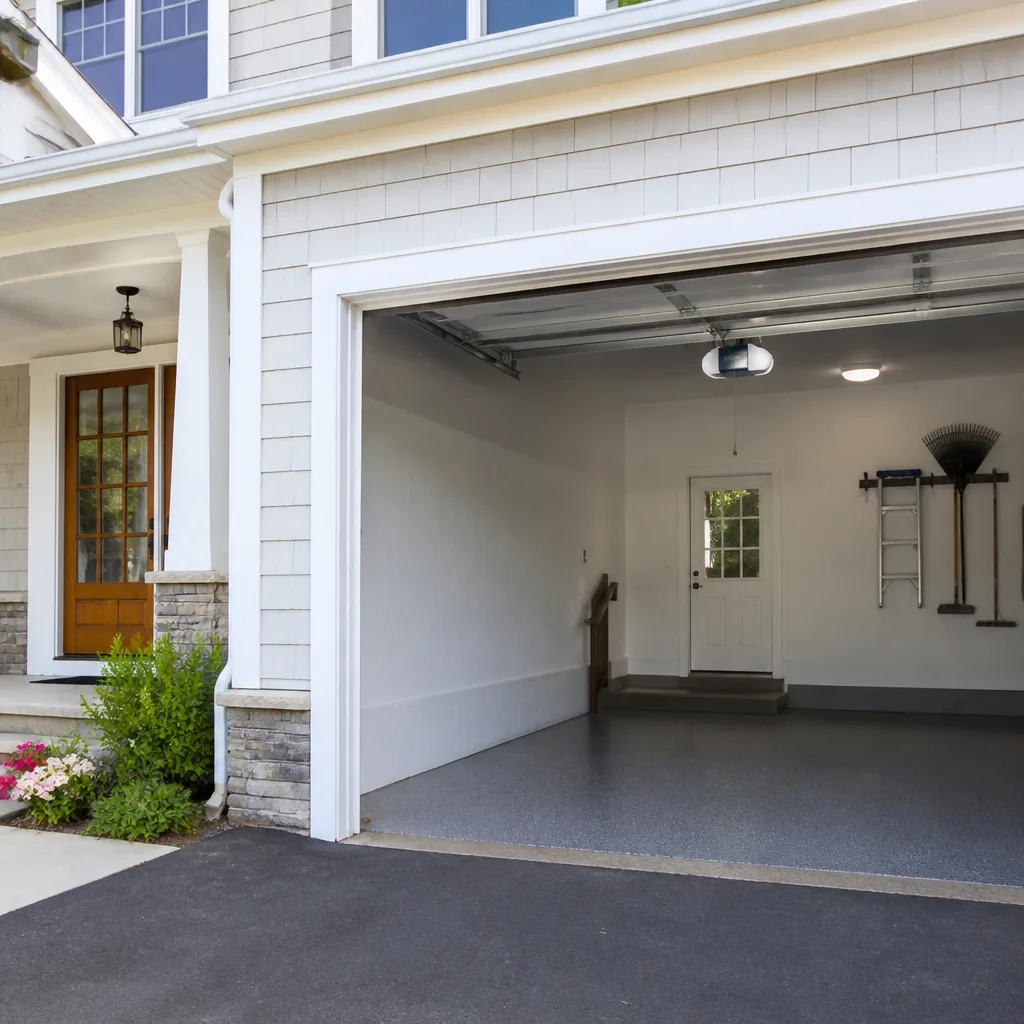 Chamberlain openers
Full 25-point door and opener safety check with every visit - springs, cables, rollers, tracks, and your LiftMaster or Chamberlain opener included
You get a price before we start. It does not change when the pro arrives.
Get your free estimateDIY vs Professional Garage Door: The Laredo Homeowner’s Decision Guide
Torsion spring work is the one garage door job where the DIY calculation isn’t about confidence or cost. It’s about stored energy. A wound torsion spring holds hundreds of pounds of tension, and the injuries it causes every year happen mostly to people who successfully finished every other repair on their list. That’s the honest starting point for this guide. Most garage door tasks sit on a sliding scale from “go ahead, it’s a screwdriver job” to “this can take a finger or worse,” and treating them all as one decision is where homeowners get hurt or waste money. In the pages below, we’ll lay out a task-by-task framework for Laredo homeowners: what’s safe, what needs care, what should never be touched, and how to do the math on cost before you decide.
Quick Answer
You can safely handle the light tasks yourself: lubricating rollers, track cleaning, replacing a remote battery, and tightening exposed bolts. Spring replacement, cable work, and anything involving the counterbalance system should always be done by a trained technician – no exceptions for skill level. Everything in between depends on the specific task and the condition of your door. The full breakdown is below.
Styles & brands we work with
- Raised-panel steel
- Carriage house
- Modern flush
- Full-view glass
- LiftMaster openers
- Chamberlain openers
Table of Contents
- The Task-by-Task DIY Viability Matrix
- How Laredo Conditions Change the DIY Equation
- True Cost Comparison: DIY vs Professional for Five Common Repairs
- Why Springs Are in a Category of Their Own
- Partial DIY: Prep Work That Cuts Your Bill
- How to Verify a Professional Knows Your Brand
- When to Call a Professional
- Frequently Asked Questions
The Task-by-Task DIY Viability Matrix
Homeowners tend to ask “can I DIY my garage door?” as a single question. It isn’t. A garage door is a system of springs, cables, drums, hinges, rollers, tracks, and a motor unit, and each one carries a different risk profile and a different set of special tools. Below is how we classify tasks when homeowners ask, and it’s the same framework our technicians use when they’re sizing up a job before they touch it.
Green: Safe for Most Homeowners
- Lubricating hinges, rollers, and springs – a can of garage-door-rated lubricant and five minutes every few months.
- Replacing a remote battery – no risk, no tools beyond a tiny screwdriver.
- Tightening accessible bolts on hinges and brackets – but stop if a bolt won’t catch; that signals a stripped hole.
- Wiping and inspecting tracks – look, don’t bend.
- Re-engaging a disengaged opener – pull the red release cord, hook the trolley back in by hand, then test the door’s balance before reconnecting.
- Clearing debris from the photo-eye sensors – a common cause of doors that won’t close.
Yellow: Possible, With Real Caution
- Replacing a bottom weather seal – easy on most doors, but the door needs to be fully down and the old seal pried off without bending the bottom section.
- Straightening a mildly bent track section – possible on a gentle ding, but a bent track usually means the door caught something. If the bend is deeper than a thumb-width, that’s a track-replacement job.
- Adjusting opener force or travel limits – doable from the manual on most brands, but a door that needs more force is often trying to tell you something is wrong with the door itself.
- Replacing rollers – feasible on some doors, but you’re working on a door held in tension. If the door isn’t fully down or supported, don’t start.
Red: Never DIY, Regardless of Skill
- Torsion spring replacement or adjustment – the springs are wound, and unwinding one incorrectly releases stored energy in an uncontrolled direction.
- Extension spring replacement – lower tension than torsion, but still a loaded assembly that can travel.
- Cable replacement – the cables are what carry the door if a spring fails. Getting one wrong is not a small mistake.
- Drum or center-bearing plate work – the door must be de-tensioned by a trained technician before the shaft is touched.
- Panel replacement on a door with damaged structure – a misaligned panel can come down if the door’s balance is compromised.
How Laredo Conditions Change the DIY Equation
Most generic garage door guides are written for a climate that doesn’t match Laredo’s. Heat and dust change which tasks are actually easy and which quietly aren’t. If you’re going to attempt anything on the green or yellow list, these are the local factors to understand first.
Heat-Expanded Tracks
In a Laredo summer, steel tracks expand with the day’s heat and can go slightly out of alignment by afternoon that they weren’t in the morning. Homeowners who try to adjust a track in the cool of morning and re-check it at 3pm often find the door rubbing again. If your door only binds in the heat of the day, that’s a sign the track has expanded into a bind rather than a sign the door needs work. A technician checks gap measurements and track plumb with the door’s actual operating temperature in mind, which is why the diagnosis can take longer than the fix.
Caliche Dust and Roller Wear
Dust from caliche soil, which is common in Laredo’s newer subdivisions and on the edges of town, gets into roller bearings and hinge pivots. When it mixes with old grease, it turns into a gritty paste that eats rollers faster than in a wetter climate. A homeowner who lubricates rollers with a proper garage-door lubricant will get more life out of them here than in most cities. A homeowner who uses household oil or WD-40 will find that dust sticks to it and makes things worse.
What This Means for DIY
Track adjustment becomes a “watch it across a full day” task, not a “do it once and done” task. Roller replacement is more frequent, so it’s worth learning the correct procedure. And any job that involves removing and reinstalling hardware needs to account for the fact that exposed steel can be hot enough to burn a hand during July and August. Work gloves aren’t optional in Laredo, even on the easy jobs.
True Cost Comparison: DIY vs Professional for Five Common Repairs
The honest comparison isn’t “parts cost vs labor cost.” It’s “parts cost, plus your time, plus the probability you’ll need a professional anyway, plus the cost of any damage the attempt caused.” Here’s how the math shakes out for the five most common repairs in Laredo homes.
1. Roller Replacement
DIY cost: the rollers themselves, usually a modest parts purchase. Professional cost: labor plus parts. The variable that decides it is which rollers your door uses. Standard steel rollers are straightforward to swap. Nylon rollers on a heavier door need the door supported, and if the door is already out of balance, swapping rollers without addressing the underlying tension can shift the load onto the cables. For a single worn roller, DIY is reasonable. For a full set on an older door, the professional cost is often worth the peace of mind.
2. Weather Seal Replacement
This is the clearest DIY win on cost, since it’s the seal material plus a few minutes of work. The professional difference comes down to whether the old seal comes out cleanly or is fused to the aluminum retainer after years in the Laredo heat. If the seal is brittle and tearing instead of sliding out, the retainer may need replacing too, and that’s where the job crosses into pro territory.
3. Opener Repair
Opener issues split into two very different categories. Remote and keypad programming is genuinely DIY-friendly on most LiftMaster and Chamberlain units, and a homeowner who reads the manual carefully can usually handle it. Motor, logic board, travel module, and gear-and-sprocket work are not DIY-friendly. These assemblies carry capacitors that hold charge after power is off, and a misdiagnosed board is an expensive part to install and discover still wasn’t the problem. Our garage door opener repair specialists treat opener diagnosis as its own skill precisely because the symptom (door won’t open) can come from the door, the opener, or the safety sensors.
4. Bent Track Repair
DIY cost on a minor bend is close to zero if you have the tools. But a track that bent because the door came off a roller needs more than a bend correction. The question is why it bent. If you straighten the track without answering that, the door will bend it again. A professional diagnosis on a bent track almost always costs less than the second repair after a DIY fix that didn’t hold.
5. Spring Replacement
This is where the cost comparison effectively ends. DIY is not a valid option on a torsion spring, and the risk of serious injury isn’t a hypothetical. A torsion spring carries enough stored force to break bones, and the hardware involved is under load at every step of the process. The professional cost includes the correct spring sized for your door weight, the special winding bars the job requires, and the knowledge of how to release tension safely. Our garage door repair team handles spring work every week, and we’d tell you the same thing in person: leave this one to a trained technician.
Why Springs Are in a Category of Their Own
Every other task on the list has a failure mode you can plan for. A bent track can be replaced. A worn roller can be swapped. Spring work has a failure mode you cannot plan for, because the energy releases too fast for reaction time to matter. That’s why we don’t treat it as “the most dangerous item on the DIY list.” We treat it as a task in an entirely different category, and the distinction matters for how you think about the whole door.
The Physics Involved
A torsion spring is wound to counterbalance the door’s weight. When the door is down, the spring is at its highest tension. When the door is up, the spring is at its lowest. Every adjustment involves releasing or adding tension, and the winding bars that hold the spring in place during that process are the only thing standing between the technician and the spring’s release. If a winding bar slips out of the hole while the spring is under load, the spring unwinds in about a quarter-turn of the shaft, with enough force to seriously injure a hand, wrist, or face.
Why “I’ve Done Everything Else” Doesn’t Apply
Experience with other home repairs doesn’t transfer to spring work. Carpentry, plumbing, electrical, and drywall all reward general competence. Torsion springs reward specific technique with specific tools and a very specific understanding of what the color-coding on the spring tells you about its rating. We’ve seen homeowners who could rebuild the rest of a house correctly decide, after one close look, that this is the job they’ll hire out. That’s the right call.
Signs You Have a Spring Problem
- The door is dead-lifting heavy from the start and gets heavier as it rises.
- You hear a loud bang from the garage and the door won’t open more than a few inches.
- A visible gap has opened up in the coils of the torsion spring above the door.
- The door rises a few inches on the opener and then stops.
- The door doesn’t stay put when you disengage the opener and lift it halfway by hand – balance is off.
If you see or hear any of these, don’t operate the door. Call for service the same day. A door running on a broken spring shifts the entire load onto the opener, which can strip the drive gears and turn a spring repair into a spring-and-opener repair.
Partial DIY: Prep Work That Cuts Your Bill
The choice isn’t binary. There’s real money in partial DIY, which is prep work you do to shorten the professional’s time on the job. Here’s what actually helps.
- Clear the garage floor in front of the door. A technician shouldn’t have to spend the first five minutes moving bikes and boxes. Every minute saved is billable time off the estimate.
- Document what you’ve observed. Write down when the problem started, what sounds the door makes, whether it happens on open, close, or both, and whether it changes with the weather. A clear symptom description shortens diagnosis.
- Note the door and opener brand and model. Most brands list model info on a sticker on the door panel or on the opener’s motor housing. For a LiftMaster, Chamberlain, Raynor, or Craftsman unit, having the model number ready lets the technician show up with the right parts on the first visit.
- Disengage the opener before the technician arrives if the manual release is safe to reach. Don’t force anything that feels stuck.
- Photograph the label inside the opener housing if you can reach it without tools. It saves time when the technician needs the exact model.
None of this replaces the professional’s diagnosis, but it can shorten it. When we handle a garage door repair call, this kind of client preparation is one of the reasons the job finishes in one visit rather than two.
How to Verify a Professional Knows Your Brand
Not all garage door technicians are equally equipped to work on every system. A generalist handyman may be able to replace a weather seal but may not know the specific force-adjustment procedure on your opener or the correct spring color code for your door’s weight rating. Here’s how to check before someone starts.
Questions to Ask on the Call
- “Do you work on [your brand] specifically?” Get a direct answer. Our technicians work on eight of the industry’s leading brands – LiftMaster, Chamberlain, Genie, Clopay, Amarr, Wayne Dalton, Craftsman, and Raynor – and we’ll tell you straight if your system is one we handle.
- “Do you do only garage doors, or other trades too?” A dedicated garage door specialist spends every working day on doors and openers. That focus matters for diagnosis speed and for knowing the specific failure pattern of each brand.
- “Can you quote the price range for this repair over the phone?” A specialist can usually give you a realistic range based on the symptom description alone. Vague answers usually mean the person hasn’t seen many of these.
- “Will the price be confirmed in writing before work starts?” The answer should be yes, and the price on the written estimate is what you’ll pay.
What to Check When the Technician Arrives
- Ask what diagnostic steps they’re taking and why. A specialist explains the reasoning naturally.
- Ask what parts they’re installing and whether they’re OEM or aftermarket. Brand-specific knowledge shows up in how the technician matches a replacement part to the original system.
- Ask them to walk you through the state of the rest of the door before they start work. A good technician flags a worn cable or a sagging panel before it becomes a separate call.
For homeowners in Laredo who want to know what brand-specific service looks like, our garage door opener repair team fields these questions on every call, and the answers matter as much as the repair itself.
When to Call a Professional
If any of the following are true, the decision is made: call a professional.
- Your door won’t stay closed, won’t open past a few inches, or feels dangerously heavy from the first inch of travel.
- You see a gap in a torsion spring, a broken extension spring, or a frayed or slack cable.
- The door is off its track after a bump, a storm, or a car contact.
- The opener runs but the door doesn’t move, or the opener clicks and stops.
- Your door panels are cracked, sagging, or misaligned enough that the door’s balance may be compromised.
- You’ve adjusted something and the door now behaves worse than it did before.
Garage Door Repair Laredo offers free estimates in Laredo – call (855) 360-7055 to arrange a visit. We answer 24/7. Fast dispatch from 7am to 7pm, Sunday through Friday. Our technicians have up to 14 years of experience, and the estimate is confirmed in writing before any work begins.
See the difference
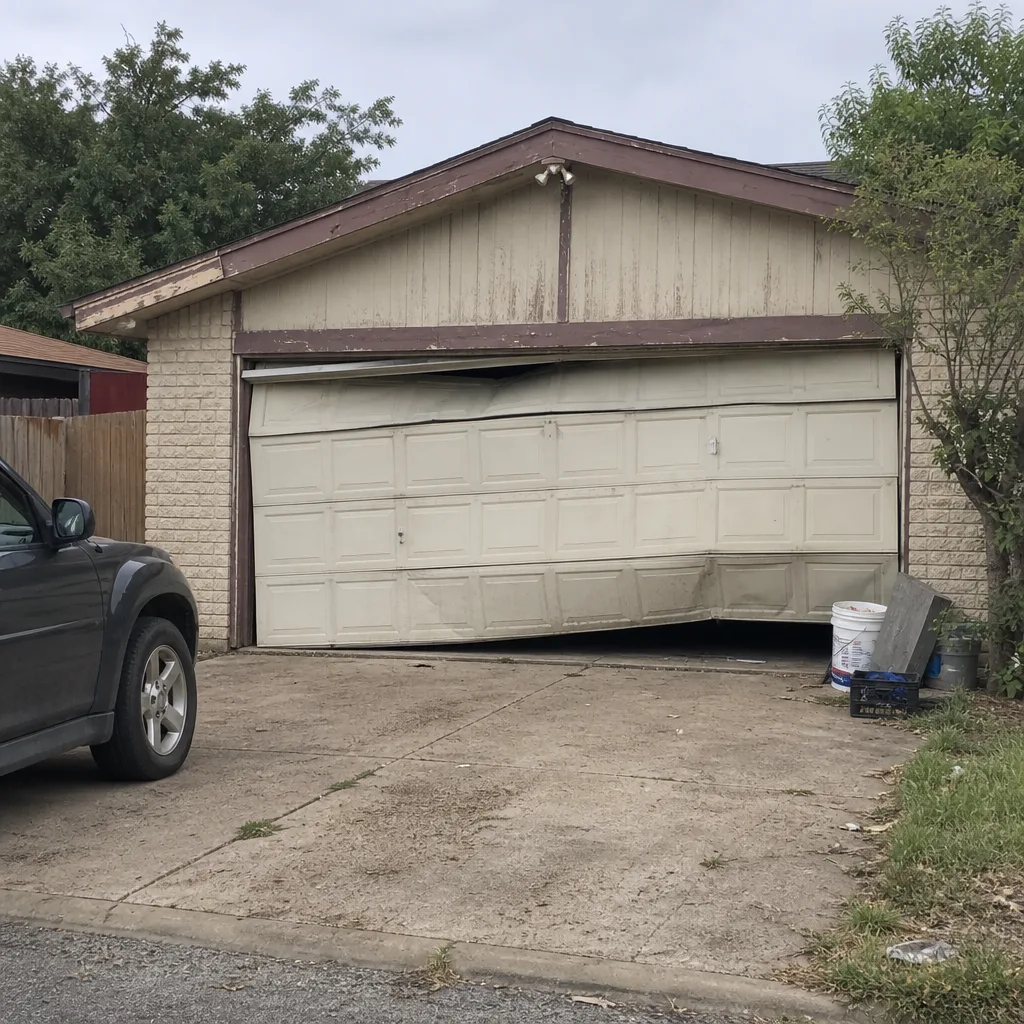 Before
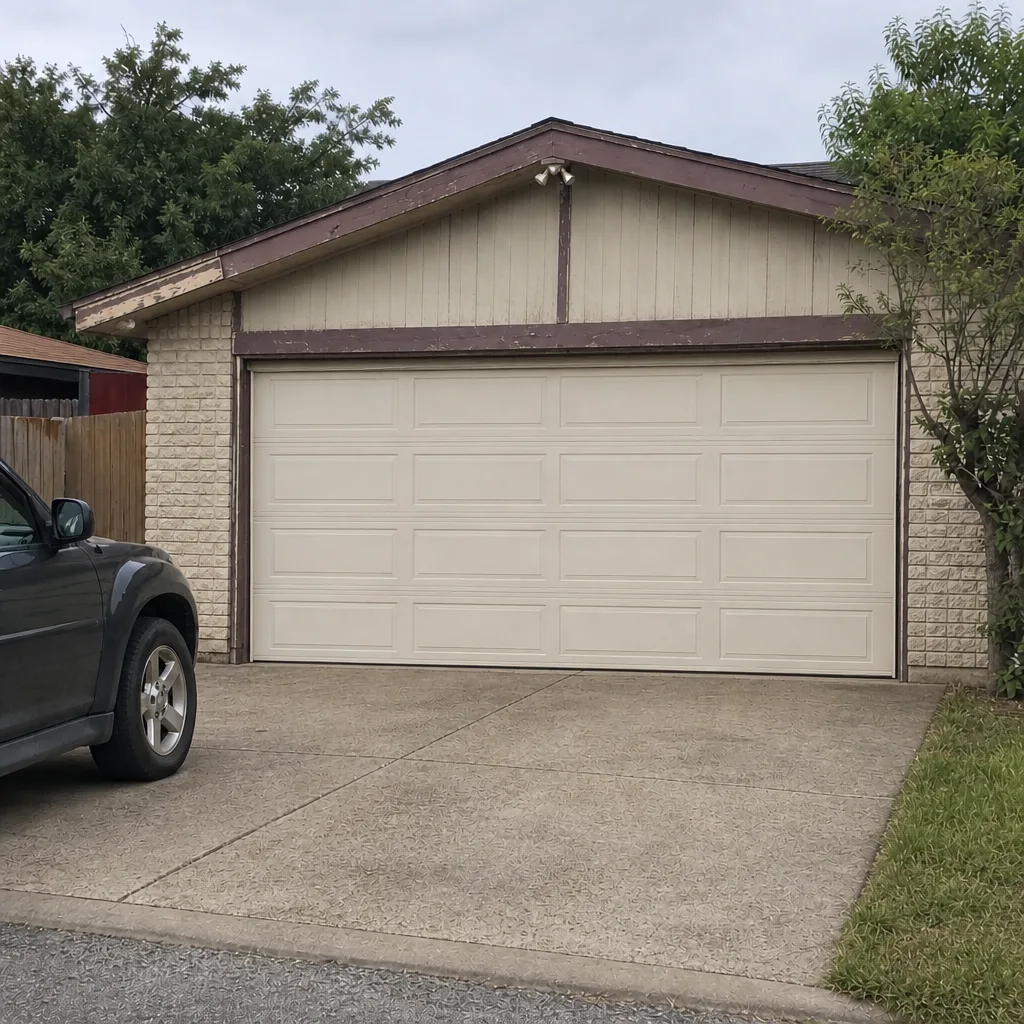 After
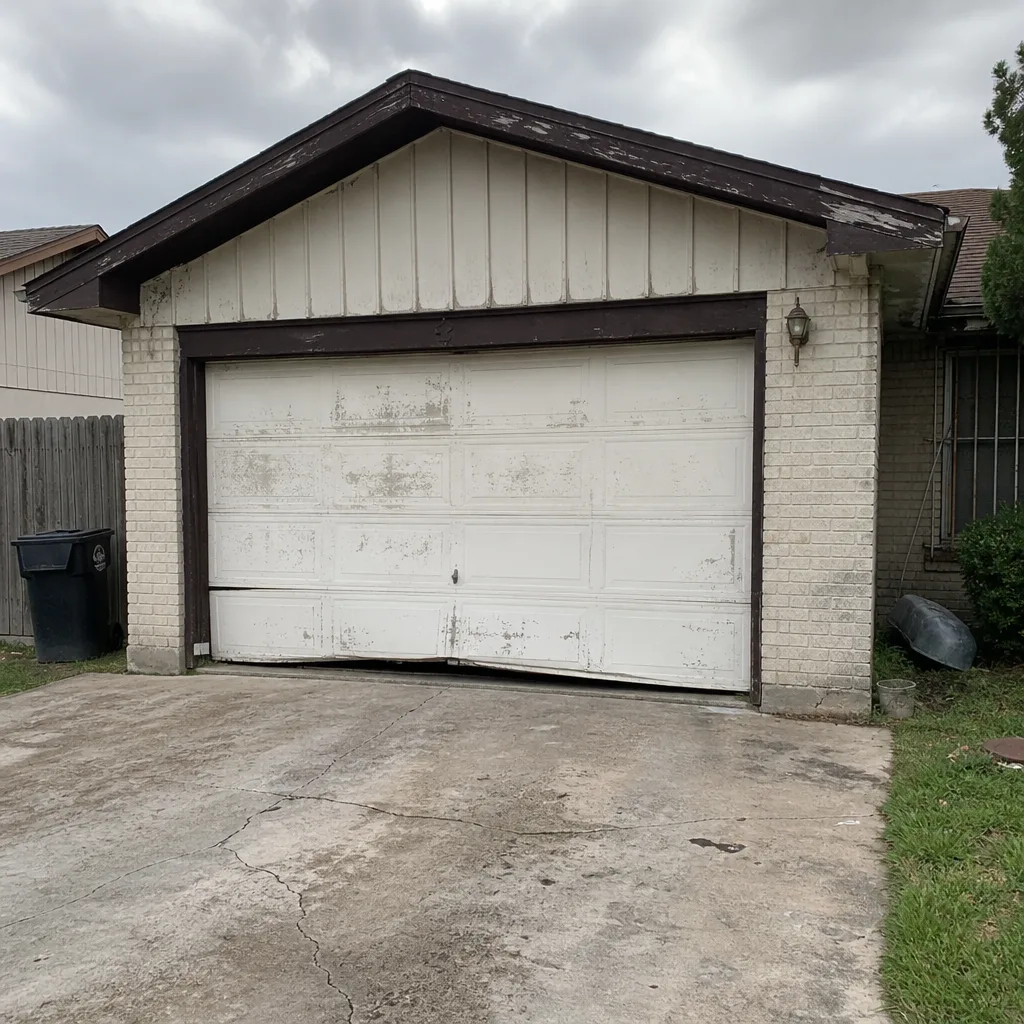 Before
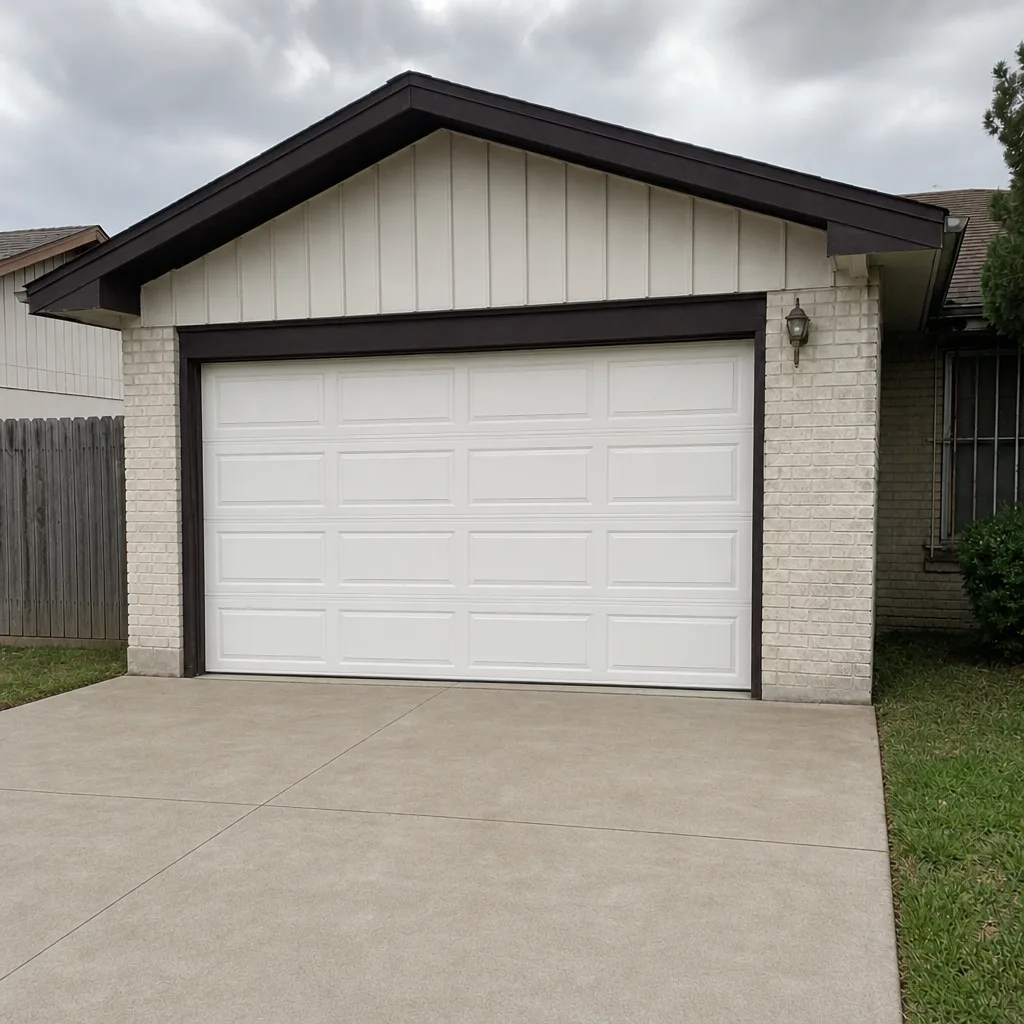 After
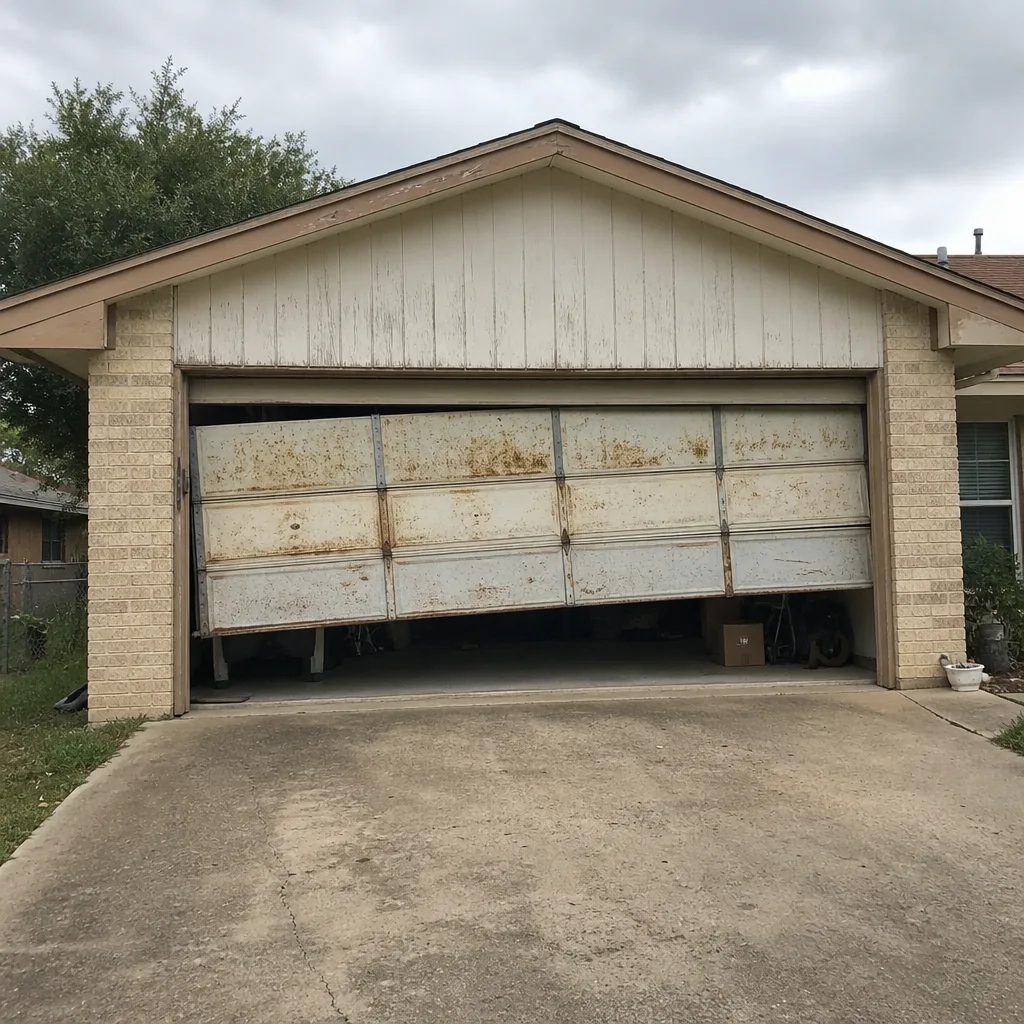 Before
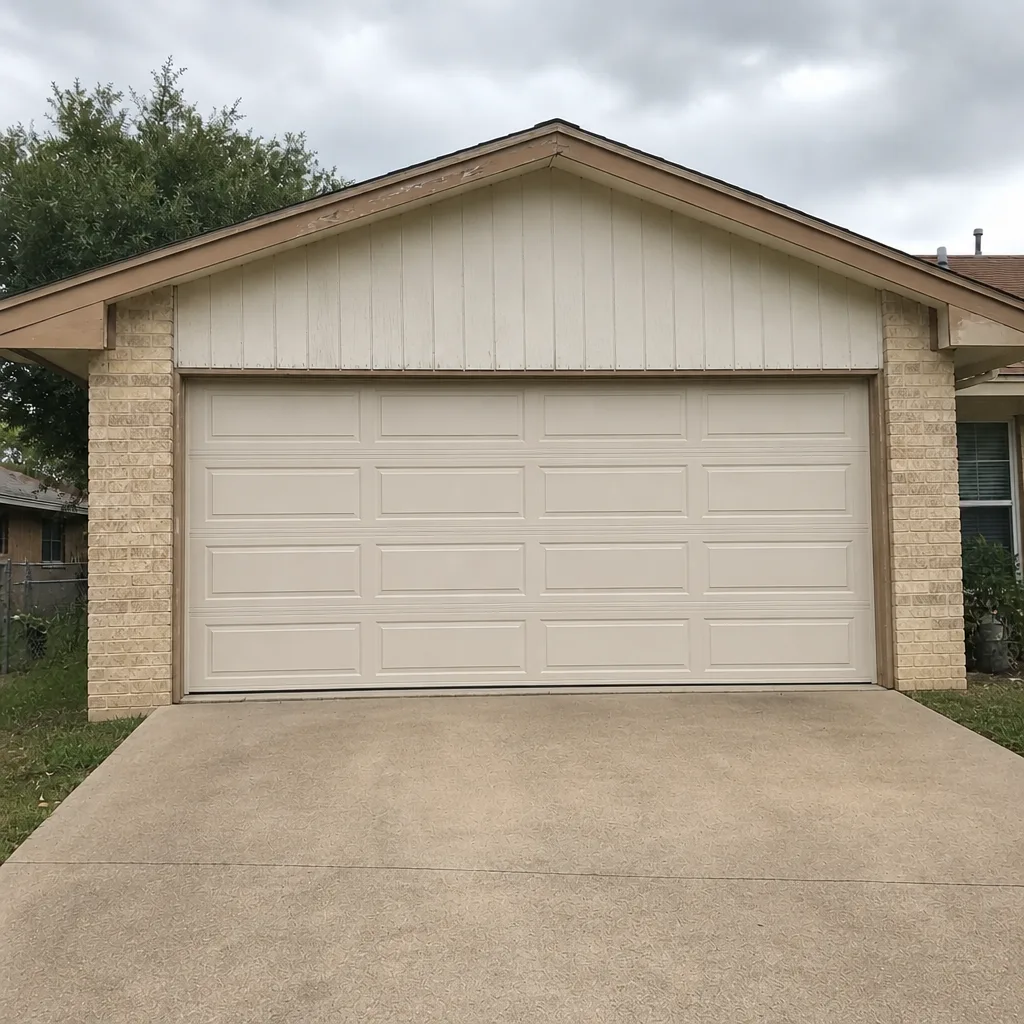 After
Common Mistakes to Avoid
- Lubricating with household oil or WD-40. Both attract dust, and in Laredo that dust comes from caliche soil. Use garage-door-rated lubricant or skip the job.
- Adjusting opener force to compensate for a heavy door. If the door feels heavy, the door itself needs service. Raising the force just strains the opener into failing sooner.
- Assuming a bent track is a simple straighten job. Track damage usually has a cause, and a straightened track on a door that still has the underlying problem will bend again.
- Ignoring a small gap in a torsion spring. A small gap grows. The door can drop without warning, and the repair cost climbs.
- Hiring a generalist because the price is lower. A generalist may not know the specific spring rating, opener calibration, or cable setup for your door, and the second visit costs more than the first would have.
- Skipping the written estimate. Any professional garage door job should start with a written quote, agreed before work begins. If someone wants to start immediately without paper, that’s a warning sign.
- Forgetting to check balance after replacing hardware. A door can pass a visual inspection at the moment and still be out of balance after the first cycle. Test the manual release carefully after any work.
Frequently Asked Questions
No. Torsion spring replacement is not a DIY task at any skill level because the spring is stored energy, and the winding process requires specific tools and technique that a homeowner cannot safely improvise. This is the one garage door task we consistently advise against attempting. Call (855) 360-7055 for a free estimate.
The safe DIY list includes lubricating hinges and rollers, replacing remote batteries, tightening exposed bolts, and clearing photo-eye sensors. If your Laredo home is in a newer subdivision where caliche dust is a problem, regular lubrication becomes more valuable. For anything involving springs, cables, or panel structure, call a professional.
The price depends entirely on the job, so we don’t quote a fixed number. What we can say is that you’ll receive a written estimate confirmed before any work starts, and the price on that estimate is what you’ll pay. Call (855) 360-7055 for a free estimate based on your door’s symptom.
Often, yes. A misadjusted opener force can burn out a drive gear. A straightened track that bends again adds a second service call. A spring adjustment attempted without training risks serious injury. The comparison isn’t just DIY cost vs pro cost; it’s DIY cost plus the probability of a follow-up professional job, plus the cost of any damage the attempt caused. Call (855) 360-7055 for a free estimate and an honest recommendation on whether to attempt or hire out.
Yes. We work on Craftsman, Raynor, LiftMaster, and Chamberlain systems, along with Genie, Clopay, Amarr, and Wayne Dalton – eight of the industry’s leading brands. Bringing us your model number when you call helps us make sure we handle your specific system. Call (855) 360-7055.
We answer 24/7 and dispatch Sunday through Friday from 7am to 7pm. Same-day visits are available for repair calls, though exact timing depends on the day. If the door is completely down, tell the dispatcher when you call so we can prioritize. Call (855) 360-7055.
If the door runs smoothly but sounds gritty, cleaning and lubrication are likely enough. If the door binds at a specific point in travel, or the track has a visible bend deeper than a thumb-width, that’s professional territory. Heat-expanded tracks in Laredo often mimic a bend without actually being bent, which is why diagnosis matters. Call (855) 360-7055 for a free estimate.
Partial DIY saves on billable time rather than on parts. If you clear the garage floor, write down the specific symptoms, and have the door and opener model numbers ready, the technician’s diagnosis starts faster. That often turns a two-visit repair into one. It’s worth doing before any professional arrives in Laredo.
The Bottom Line
The DIY vs professional question is not a single decision. It depends on which specific task you’re looking at and whether that task can harm you if it goes wrong. Homeowners in Laredo can safely handle lubrication, batteries, tightening, and sensor cleaning. They should be careful with seals, rollers, and minor track work, since the local heat and caliche dust raise the difficulty. And they should never touch springs or cables, at any skill level. If you’re not sure which category your issue falls into, call (855) 360-7055 and describe the symptom. Our technicians work on LiftMaster, Chamberlain, Genie, Clopay, Amarr, Wayne Dalton, Craftsman, and Raynor systems, and we’ll tell you honestly whether it’s a job for the weekend or a job for us. Free estimates in Laredo, written and confirmed before work begins. Call Garage Door Repair Laredo at (855) 360-7055 for a free estimate today.
Written by the team at Garage Door Repair Laredo.