
Last updated November 15, 2026
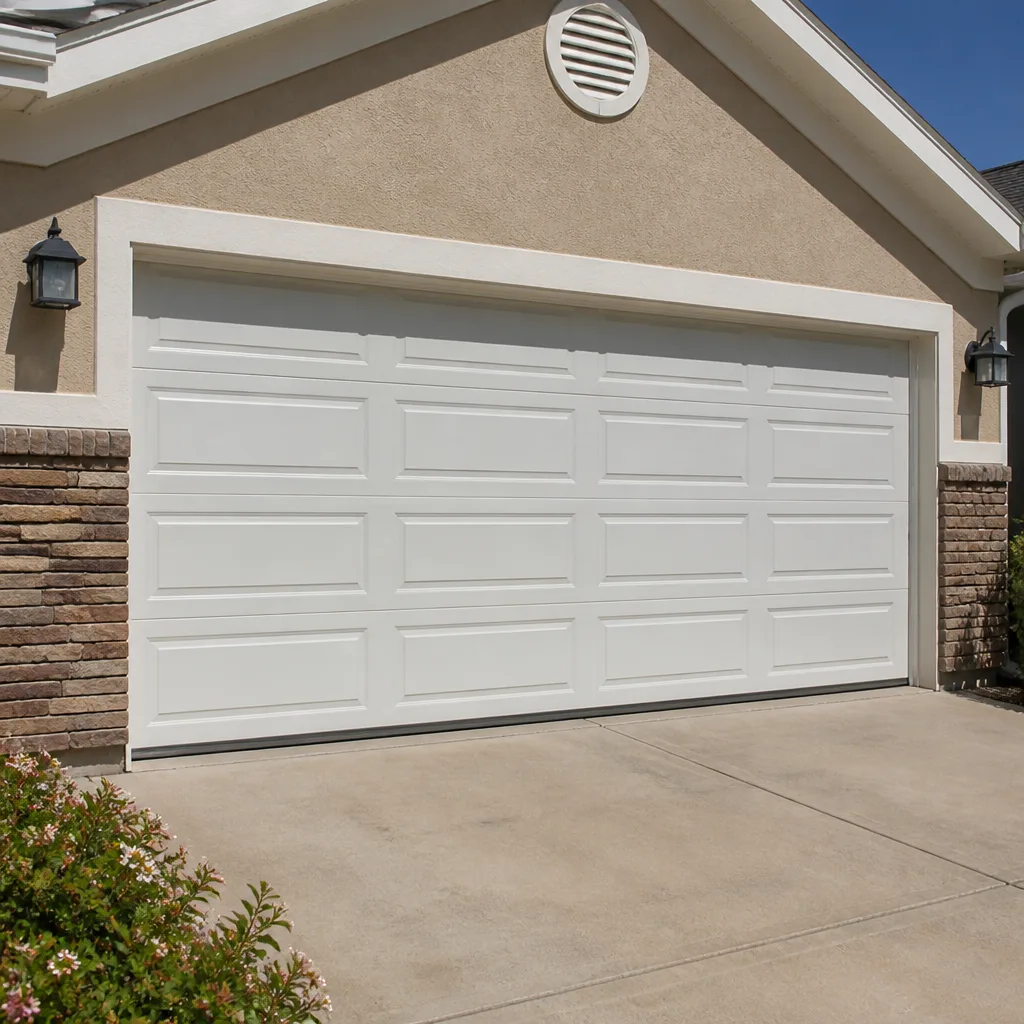 Raised-panel steel
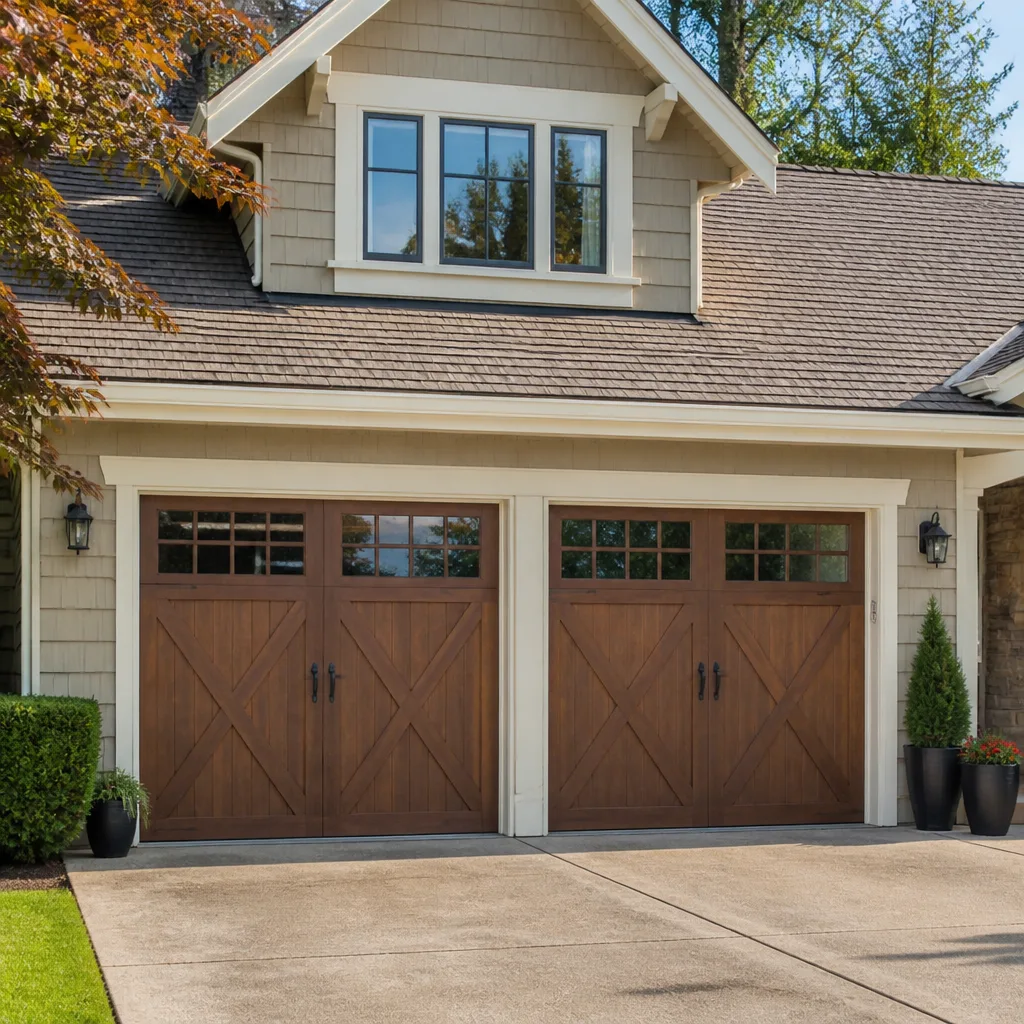 Carriage house
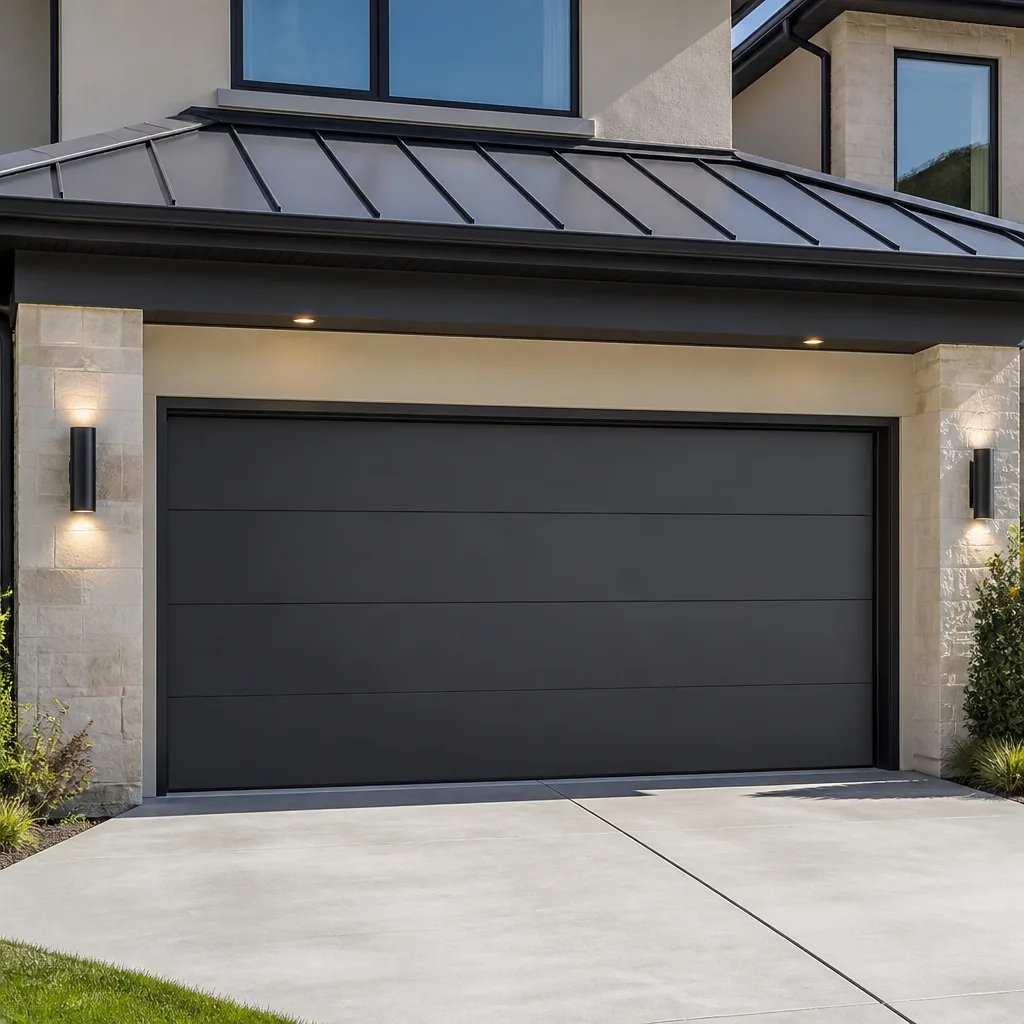 Modern flush
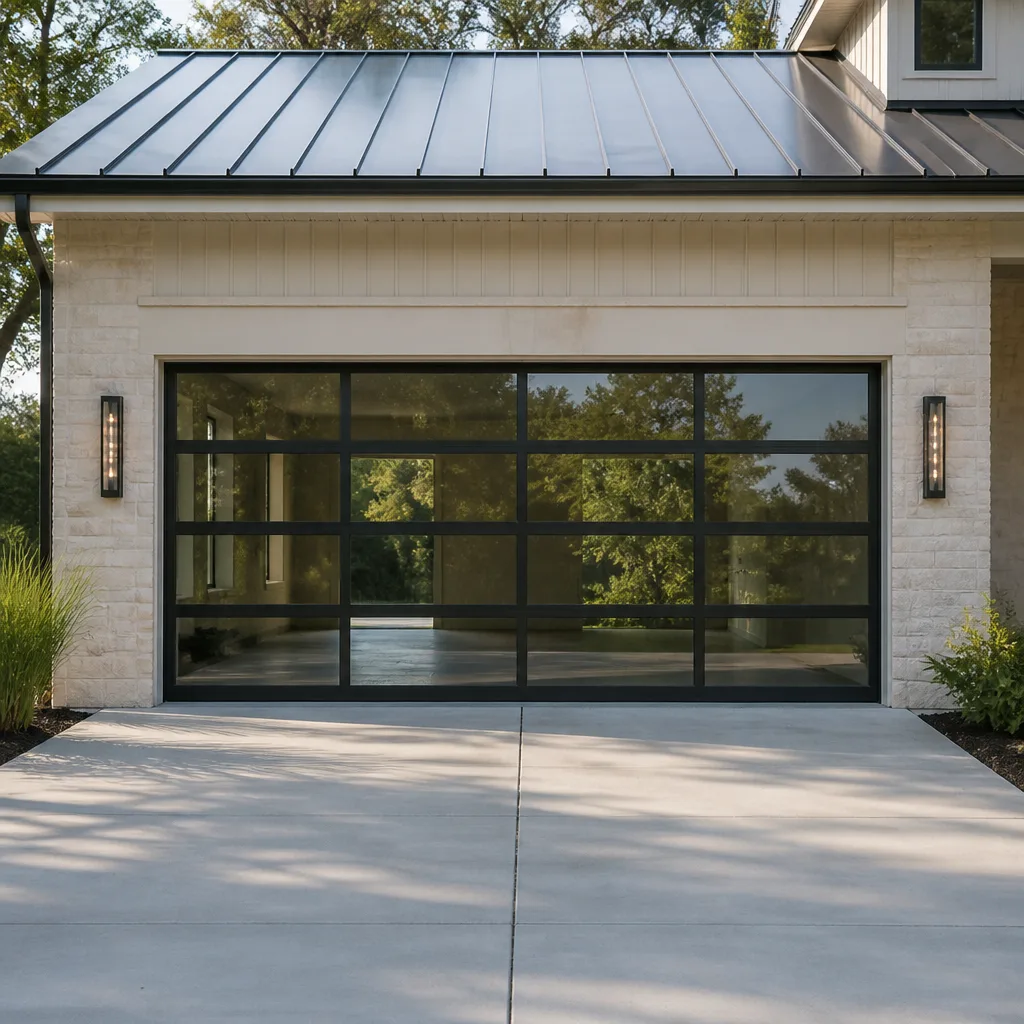 Full-view glass
 LiftMaster openers
 Chamberlain openers
Full 25-point door and opener safety check with every visit - springs, cables, rollers, tracks, and your LiftMaster or Chamberlain opener included
You get a price before we start. It does not change when the pro arrives.
Get your free estimateGarage Door Repair Troubleshooting in Laredo: Common Problems and How to Fix Them
A door that won’t open could have six different causes with six different fixes. That’s the part most homeowners miss. They see one symptom, assume one cause, and start turning the one adjustment screw that seemed relevant. Sometimes the door works again. More often, they’ve spent an afternoon and made a small problem bigger. A garage door is a system of springs, cables, tracks, rollers, sensors, and an opener, and each part fails differently. This guide teaches you to read the door like a technician: which system is actually failing, which fixes are safe to try in Laredo, and which ones belong to a trained specialist.
Quick Answer
Most garage door problems in Laredo trace back to one of five root causes: balance and spring tension, track alignment, cable wear, safety sensor misalignment, or an opener fault. Reading the symptom carefully – whether the door won’t start at all or stops mid-travel, for example – points you to the right system before you touch anything. Safe checks at home include lubrication, cleaning photo-eye lenses, and testing the opener’s error code. Spring, cable, and track work belong to a trained technician.
Styles & brands we work with
- Raised-panel steel
- Carriage house
- Modern flush
- Full-view glass
- LiftMaster openers
- Chamberlain openers
Table of Contents
- Symptom-to-System Mapping: Read the Door Before You Touch It
- Why Laredo Heat Changes the Troubleshooting Picture
- Stops Mid-Travel vs. Won’t Start: Two Very Different Problems
- How to Use Your Opener’s Error Codes Across Major Brands
- Which Fixes You Can Safely Do Yourself
- The Jobs That Belong to a Trained Technician
- Repair or Replace: How to Actually Decide
- Preventing Repeat Breakdowns in Laredo
Symptom-to-System Mapping: Read the Door Before You Touch It
Before you consider garage door repair, work out which part of the system is failing. The symptom you see on the outside rarely matches the component at fault on the inside. This mapping step saves time and money, because it keeps you from adjusting the opener when the real problem is a spring, or chasing a track issue when a sensor is simply out of line.
Use this guide to connect what you’re seeing to what’s likely wrong:
- The door is very heavy to lift by hand: springs. A balanced door lifts with one hand; a door that feels like dead weight has lost spring tension.
- The door won’t move at all and the opener hums: the opener’s drive system or a dead motor, not the springs.
- The door goes up a foot then reverses: safety sensors or sensor alignment.
- The door is crooked, binding, or squealing: tracks and rollers.
- A loud bang followed by a door that won’t lift: a broken spring. Stop here and call a technician.
- The door closes then bounces back open: travel limits or the close-force setting on the opener.
- The opener runs but the door doesn’t move: a broken or disengaged drive – cable, belt, chain, or the manual release being pulled.
In Laredo, we see the track and roller category more often than homeowners expect, because heat and misalignment compound each other. Naming the system before you act is the single biggest time-saver in garage door troubleshooting.
Why Laredo Heat Changes the Troubleshooting Picture
Laredo summers put real stress on every material in a garage door system, and that stress shows up in predictable places. Metal tracks expand and contract through the day. Lubricant thins faster than in cooler climates. Photo-eye brackets shift. None of this means your equipment is faulty – it means it needs checking on a schedule that fits this climate, not a generic one.
Here’s what the heat actually does, and where to look:
- Tracks warp and drift out of plumb. Long, hot afternoons can push a lightweight track slightly off alignment, which makes rollers bind and the door drag. A door that worked all spring and suddenly strains in July is often a track issue.
- Photo-eye alignment slips. The sun-facing side of a garage in Laredo gets intense low-angle light that can confuse or shift bracket-mounted sensors. Cleaning and re-aiming is a safe check.
- Lubricant breaks down. High temperatures thin out grease faster, so hinges and rollers need attention sooner than the manufacturer’s generic schedule suggests.
- Rubber seals and weatherstripping dry out. Look for cracking along the bottom seal and the sides.
A simple rule for Laredo homeowners: check the track, rollers, and sensors at the start of the hot season and again in the fall. That second check matters because the swing back to milder temperatures does its own shifting. When a door misbehaves here in the summer, look for heat-related misalignment first before assuming a motor failure.
Stops Mid-Travel vs. Won’t Start: Two Very Different Problems
A door that stops partway through its travel and a door that won’t move at all are not on the same troubleshooting path. This distinction is one of the most useful in garage door diagnosis, and it’s the one homeowners skip most often. The two symptoms point to completely different components.
Won’t start at all. If the door doesn’t budge when you press the button, the fault is usually electrical or in the drive system. Check, in order:
- Confirm the opener has power – test the wall outlet and check the breaker.
- Test the wall control and a remote both. If neither works, the fault is likely the opener’s logic board or a disconnected wire.
- Check whether the manual release was pulled. A door with the release engaged can’t be driven by the opener.
- Listen for the motor. A hum with no movement points to the drive system. Silence points toward power or the board.
Stops mid-travel. A door that starts then reverses, stalls, or stops at the same spot every time is usually fighting a force limit, a sensor, or physical obstruction. A technician looks at travel limits, close-force settings, sensor alignment, and track binding. Physical binding tends to show up as hesitation at the same location – a pinch point on the track, a worn roller, or a hinge that’s dragging. If the door reverses at the floor, suspect the sensors first.
Reading which of the two you have before you touch a setting halves the diagnostic work. If it’s the opener at fault, our garage door opener repair covers the full range of systems.
How to Use Your Opener’s Error Codes Across Major Brands
Your opener is telling you what’s wrong – most homeowners just don’t read it. Modern openers use LED blink patterns as a diagnostic language. A series of flashes, then a pause, then another series, is a code, and each code points to a specific fault. Learning to count the flashes skips the guesswork entirely.
The general approach works across brands:
- Count the flashes in the first series. That number is usually the primary fault code.
- Watch for a second series after the pause – that’s often a secondary code.
- Match the count to your brand’s chart. LiftMaster, Chamberlain, and Genie all publish their own codes, though some manufacturers share a foundation (Chamberlain and LiftMaster are related lines, for instance).
Broadly, the low flash counts (one to five) tend to map to sensor or safety-reverse issues, and higher counts point to motor, travel, or logic faults. Confirm against the chart for your specific model. The right chart for a Genie isn’t the right chart for a LiftMaster, so match the code to the brand, not to a tutorial you found online.
This is where brand knowledge matters. A technician who works on LiftMaster, Chamberlain, and Genie regularly reads these patterns in seconds. Someone who installs and services a range of systems knows that a code that means one thing on one brand can mean something else on another. Our technicians focus only on doors and openers, so they read the codes on your existing brand rather than steering you toward a system they prefer to sell.
Which Fixes You Can Safely Do Yourself
Some troubleshooting tasks are genuinely safe for a homeowner with basic tools. Others are dangerous no matter how confident the tutorial made you feel. Knowing the difference protects your door and your safety. In Laredo we’d rather see you handle the safe checks and hand off the rest than attempt everything on the same afternoon.
Safe to do yourself:
- Lubricate moving parts. Apply a purpose-made garage door lubricant to hinges, rollers, and the torsion tube (not the tracks themselves). This quietens the door and cuts wear.
- Clean the photo-eye lenses. Dust and pollen fog the lenses, so a soft cloth clears the sensor and often fixes a door that reverses at the floor.
- Test the manual release. Pulling the emergency release and lifting the door by hand is your best balance check, and it’s safe as long as the door is closed first.
- Adjust the close-force or travel limits when your manual allows it. Small limit adjustments on a modern opener are within reach of most homeowners.
- Check the tracks for visible bends or debris. Looking and cleaning is safe; forcing or bending a track back is not.
Not safe to do yourself: anything touching torsion springs, extension springs, or their cables. Those parts are under extreme tension, and a trained professional should be the only hands on them, full stop. Track straightening that requires power tools and re-alignment is also a professional job, because a door can be knocked off level. And any work on opener wiring or the electrical feed to the opener belongs to someone qualified for it. A real diagnosis is worth more than a video that skips the danger.
The Jobs That Belong to a Trained Technician
Some garage door problems simply require a trained technician, and spring and cable work tops the list. The springs on a residential door hold the full weight of the door under high tension. If a spring or cable lets go while you’re working near it, the result can be serious injury. This is the one area where a DIY shortcut is never worth it. The same goes for anything that requires getting inside the opener housing or testing live electrical connections.
Beyond springs and cables, several other jobs belong in professional hands:
- Replacing torsion or extension springs. Even in our mild winters these parts work hard year-round, and cost and balance both matter here.
- Replacing badly frayed or broken cables. A cable that’s showing wear means the door is being held unevenly, and a single strand failure can cascade.
- Real track re-alignment. When a track is bent or the door is off level, a pro has the tools to reset it correctly the first time.
- Opener logic board and motor repairs. These need the right parts and a system-specific diagnosis.
- Full door or opener replacement. That’s an installation job, not a repair, and it calls for measure, order, and correct fitting.
We cover the full range: repair, opener repair, and new installation. When a job needs replacing equipment, we’ll tell you – and when repair makes more sense, we’ll tell you that too. The point is to fix what’s failing, not to sell you a whole new system when a repair will do.
Repair or Replace: How to Actually Decide
There’s no single threshold that decides repair versus replace – it depends on the cause and how much of the system is healthy. A door with a failed opener and sound panels and springs is usually a repair. A door with a cracked, rusty bottom section and several worn-out parts at once often points toward replacement. The honest answer is a diagnosis of the whole system, not just the broken piece.
Consider replacement when:
- A large portion of the door sections are damaged, rather than one part.
- The door has structural bowing or rust that’s spreading.
- The opener is old and failing on several fronts at once.
- You can’t get a reliable balance or smooth operation after repeated repairs.
Lean toward repair when:
- One component (a spring, a sensor, a roller set) is the clear culprit.
- The panels and structure are sound.
- The opener is working and only a part needs renewal.
On the opener side, we work with LiftMaster, Chamberlain, Genie, Clopay, Amarr, Wayne Dalton, Craftsman, and Raynor, so we can service what you already own rather than only the systems we stock. If a replacement is genuinely the right call, we’ll say so. If repair makes more sense, we’ll show you why. That’s how you get the same system right the first time.
Preventing Repeat Breakdowns in Laredo
Most repeat calls in Laredo come from the same handful of neglected maintenance points. A little upkeep keeps the door smooth and can catch small wear before it becomes a breakdown. Think of it as reading the door like a technician does – a glance and a touch tell you more than a hundred button presses.
Do these checks periodically:
- Lubricate hinges, rollers, and the torsion tube. A garage-door-specific lubricant works best; it stays put longer in heat.
- Test the door’s balance. With the door closed, pull the manual release, lift the door halfway, and let go. A balanced door stays put. A heavy one needs attention.
- Inspect the tracks for bends and debris. Clean out leaves and grit, which tend to collect in the Laredo wind and dust.
- Check the bottom seal and weatherstripping. Cracked seals let in heat, dust, and insects.
- Clean the photo-eye lenses and check alignment. Do it in daylight so you can see whether the sensor LED is solid.
- Listen for new sounds. A door that’s started to squeal, rattle, or bind is telling you something is wearing.
Catching these early is the difference between a quick repair and an expensive one. A door that runs smoothly in the autumn is far less likely to break down in the summer heat.
Common Mistakes to Avoid
- Adjusting the opener when a spring is broken. A door with a dead spring is dead weight, and all the opener settings in the world won’t move it – you’ll just wear out the motor. Check the balance first.
- Forcing a stuck door. Pushing or pulling against a bind can bend a track or snap a cable. Stop and diagnose instead.
- Ignoring the blink code. The opener is already telling you what’s wrong; skipping the code and guessing wastes time and money.
- Using the wrong lubricant. WD-40 isn’t a garage door lubricant. A thin household spray wears off fast in Laredo heat, while the right product lasts.
- Cleaning the tracks with grease. The tracks should be clean and dry – not greasy. Grease attracts dust, and dust binds rollers.
- Assuming a loud bang means the motor. A bang is usually a spring. Diagnose before you order parts.
- Putting off a worn cable. Fraying cables get worse, not better. A small repair now saves a bigger one later.
See the difference
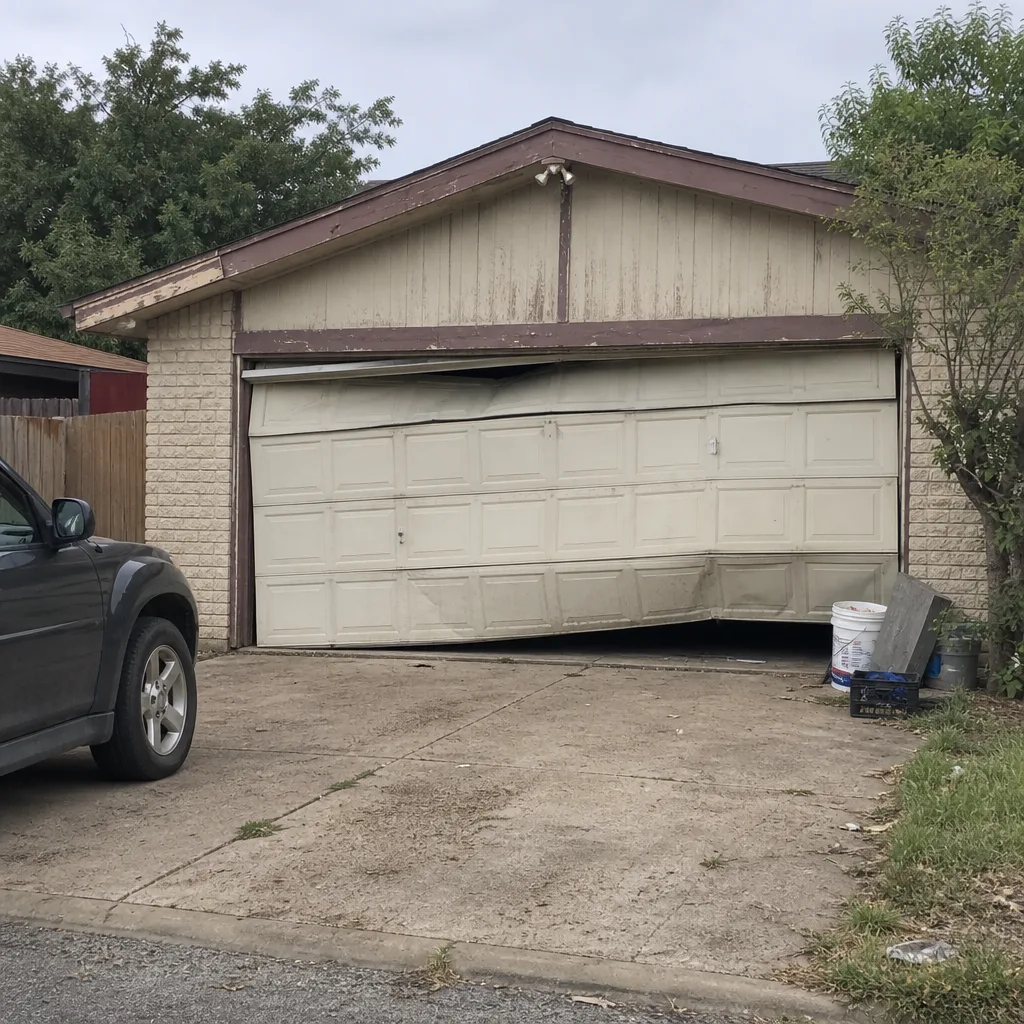 Before
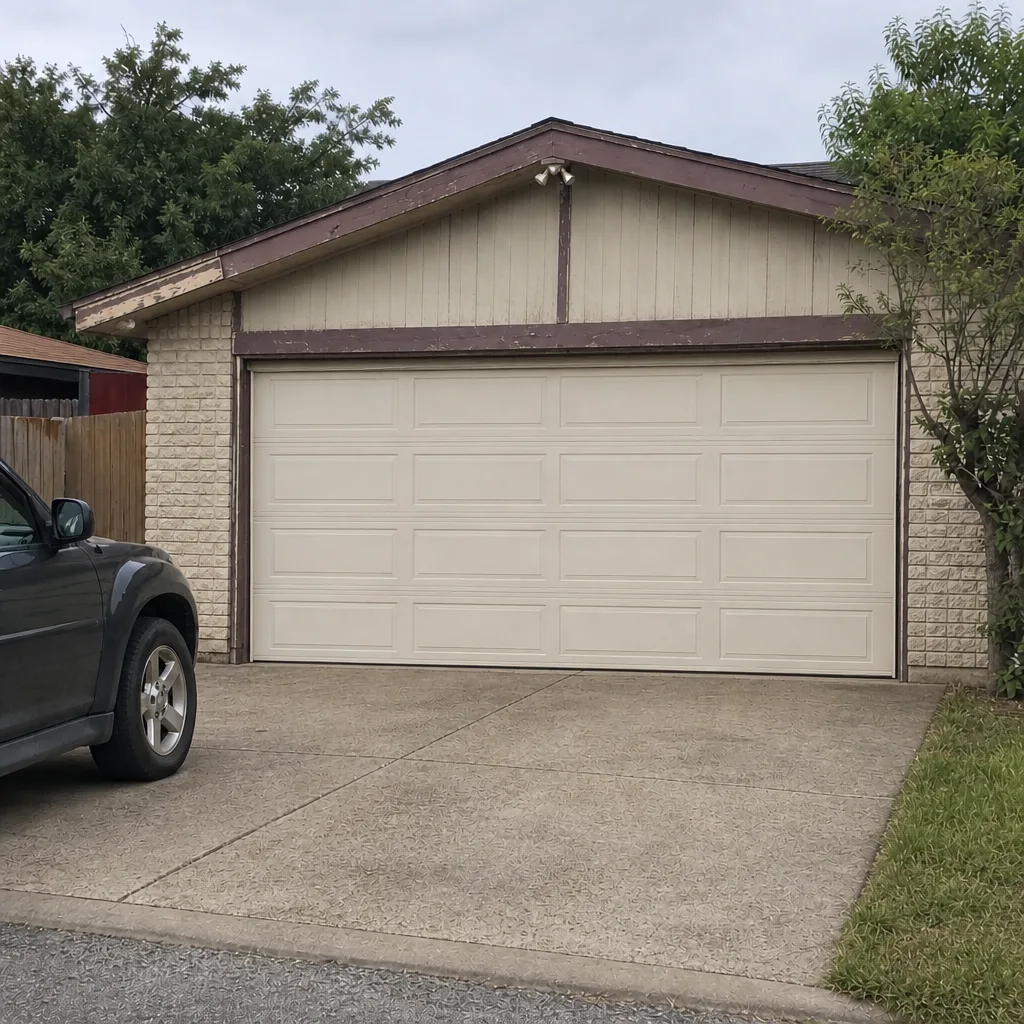 After
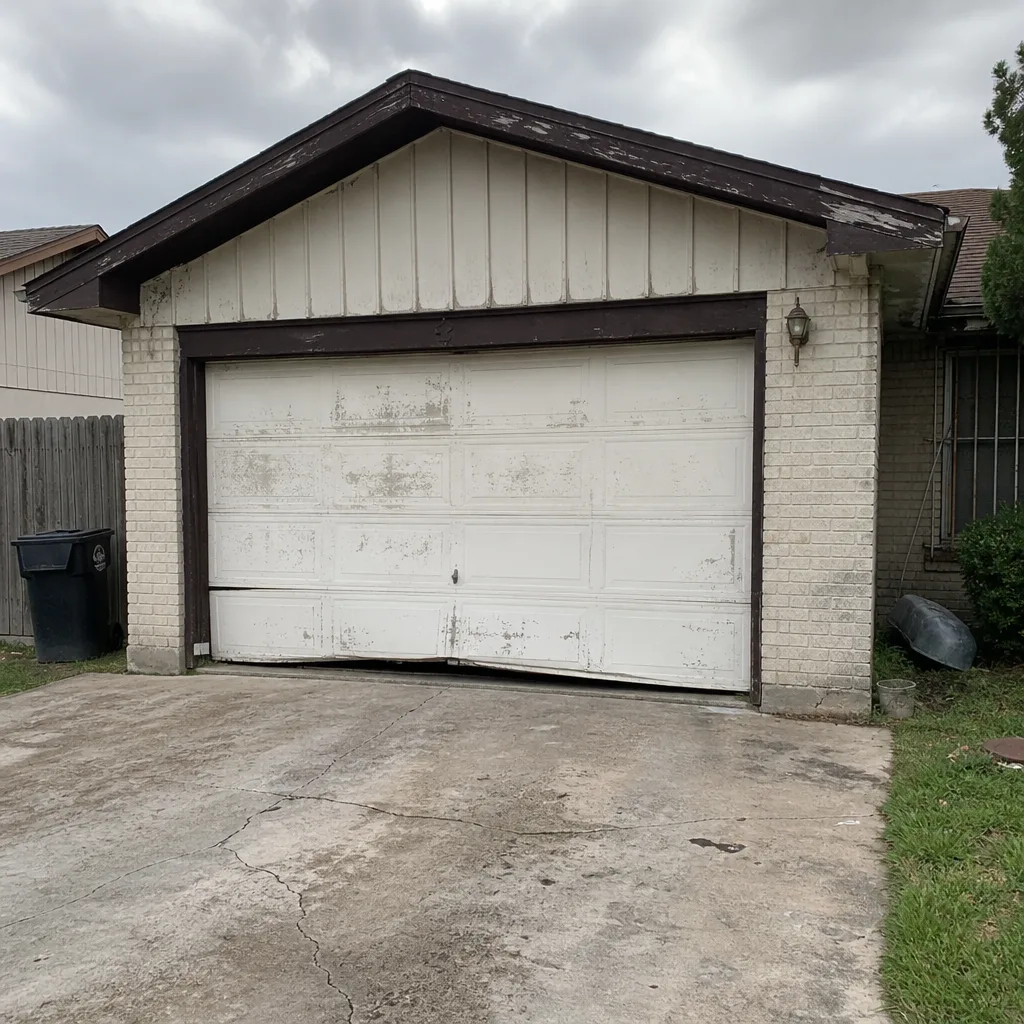 Before
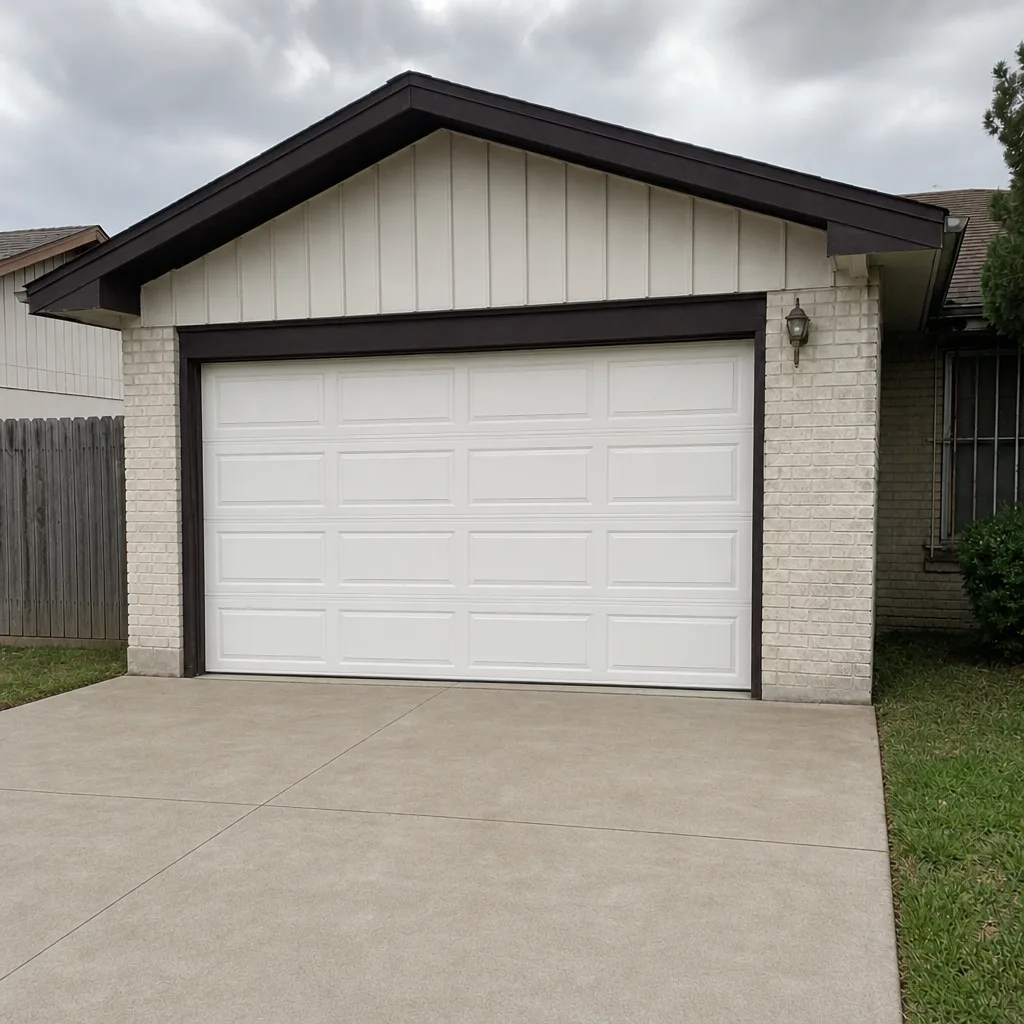 After
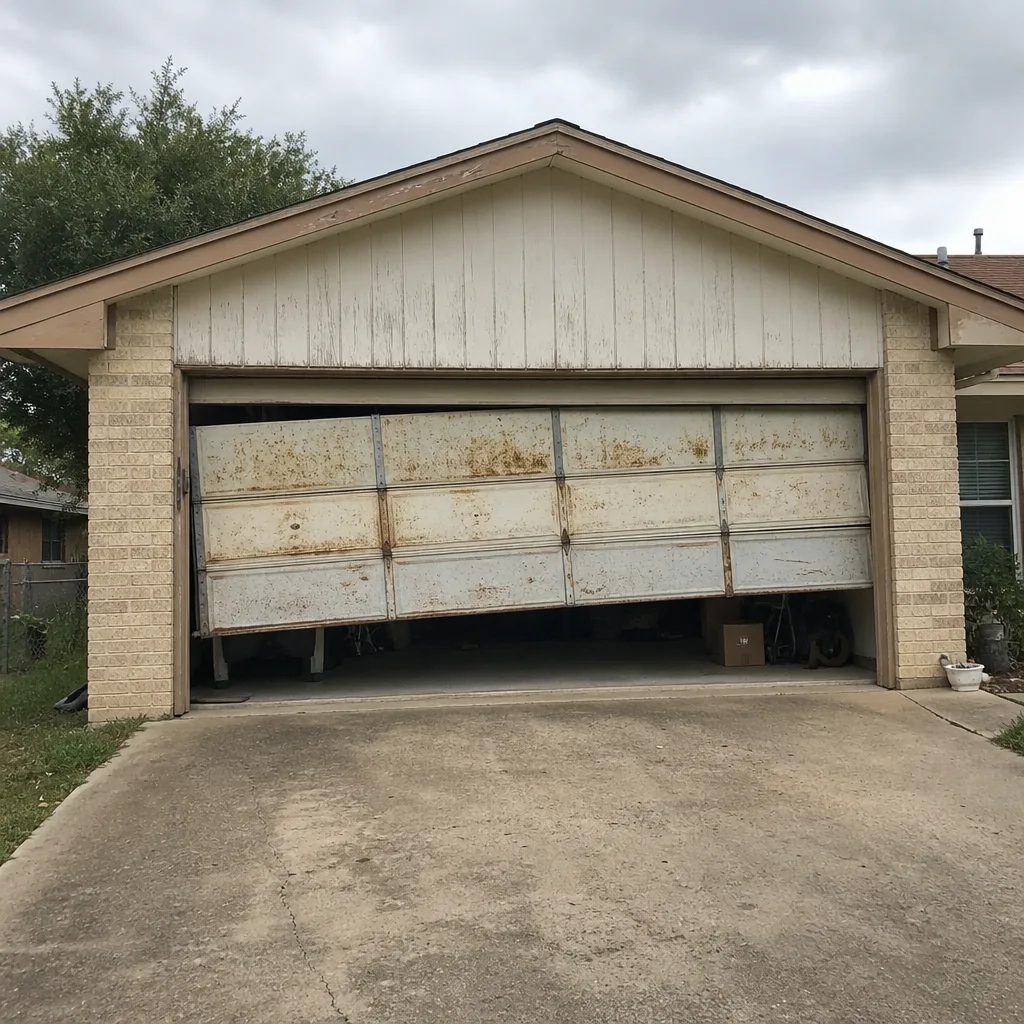 Before
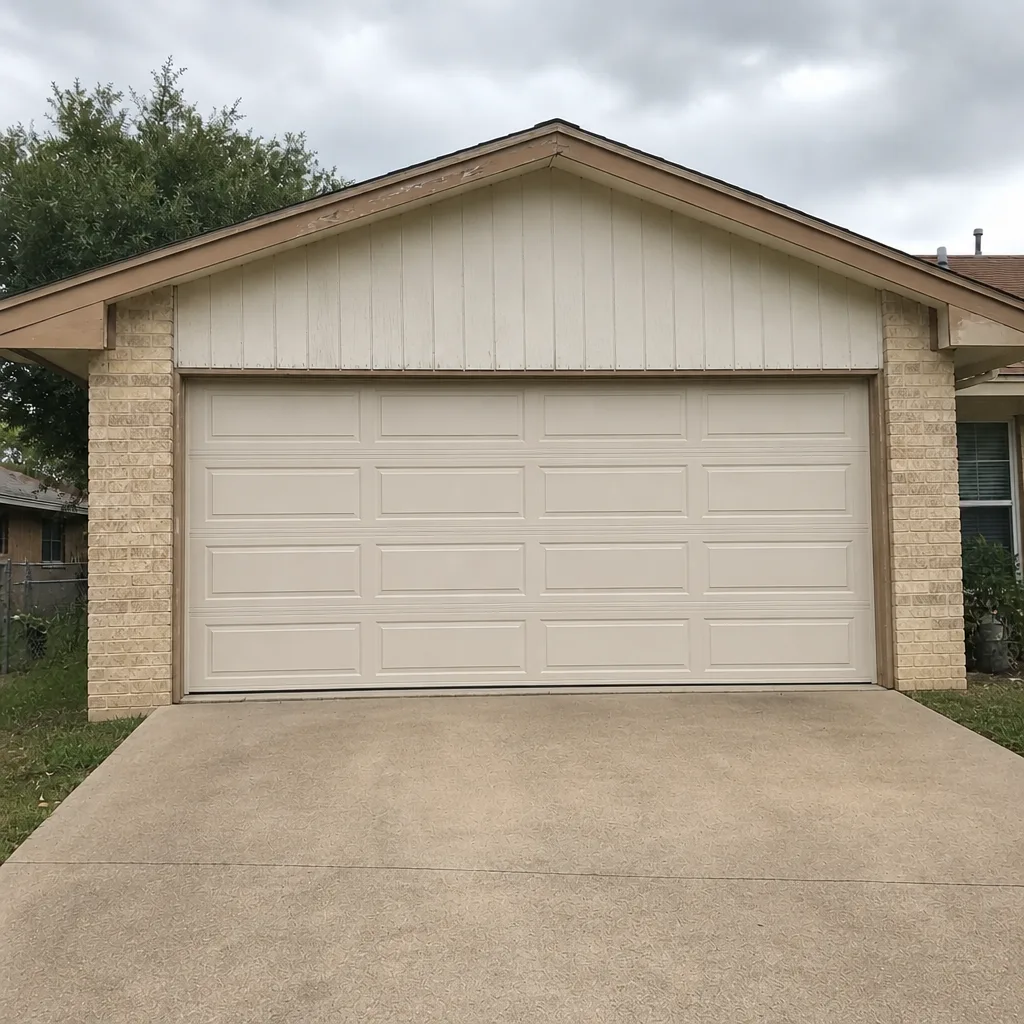 After
When to Call a Professional
Call a professional the moment a symptom points to springs, cables, tracks that need real re-alignment, or opener wiring – those jobs are dangerous or need tools most homeowners don’t have. Also call when a door won’t respond to the safe checks, when a code points to a logic-board failure, or when a repair has been attempted twice and the door still misbehaves. Garage Door Repair Laredo offers free estimates in Laredo – call (855) 360-7055. We answer 24/7. Fast dispatch from 7am to 7pm, Sunday through Friday. Our technicians have up to 14 years of experience and focus only on doors and openers.
Frequently Asked Questions
In Laredo the most common causes are a broken spring, a misaligned photo-eye, or an opener fault, and the balance test tells you which. Lift the door by hand with the release pulled; if it’s very heavy, the springs are the issue. If it’s light and the opener won’t run, the door’s fine and the opener or sensors are at fault. Call (855) 360-7055 for an exact quote if you’re not sure.
No – spring replacement is not a safe DIY job anywhere, including Laredo. Springs are under extreme tension, and a release can cause serious injury. Leave this to a trained technician. Call (855) 360-7055 for an exact quote – estimates are free.
A door that reverses before closing is almost always a safety sensor issue or a travel-limit misalignment. Clean the lenses, check that both sensors line up and have a solid LED, and rule out an obstruction first. If it still reverses, the close-force or travel limit needs a technician’s look. Call (855) 360-7055 to book a diagnostic – estimates are free.
What a code means depends on the brand, so match the flash count to your opener’s own chart. LiftMaster, Chamberlain, and Genie each publish their own patterns, and the same count can point to different faults across brands. Call (855) 360-7055 and we’ll read the code for you – estimates are free.
Yes – the heat here stresses tracks, sensors, and lubricant more than in milder climates. Expect to check alignment and lubrication more often. Catching heat-related misalignment early keeps a small adjustment from turning into a track rebuild. Call (855) 360-7055 if a summer check turns up something you can’t handle yourself.
No – the price is quoted and agreed before any work starts, and it doesn’t change afterward. You’ll get a written estimate, and the written quote is the price. Call (855) 360-7055 for an exact quote – estimates are free.
Yes – we’re state-licensed, insured and bonded, and every technician is a garage door specialist, not a multi-trade generalist. Our techs have up to 14 years of experience and focus exclusively on doors and openers. Call (855) 360-7055 with any questions – estimates are free.
The Bottom Line
Reading a garage door like a technician comes down to three moves: name the failing system before you touch anything, tell apart a door that won’t start from one that stops mid-travel, and read your opener’s error code instead of guessing. Handle the safe checks at home – lubrication, sensor cleaning, the balance test – and hand off springs, cables, real track work, and opener wiring to a specialist. In Laredo, the heat adds track and sensor checks to the routine. Do all of that and you spend less time fixing and more time with a door that just works.
Whatever your door is telling you, Garage Door Repair Laredo can help. Call (855) 360-7055 for a free estimate. We answer 24/7. Fast dispatch from 7am to 7pm, Sunday through Friday. Repair or replace – we’ll tell you which one actually makes sense, and we’ll quote the price before any work begins.
Written by the team at Garage Door Repair Laredo.