
Last updated November 15, 2026
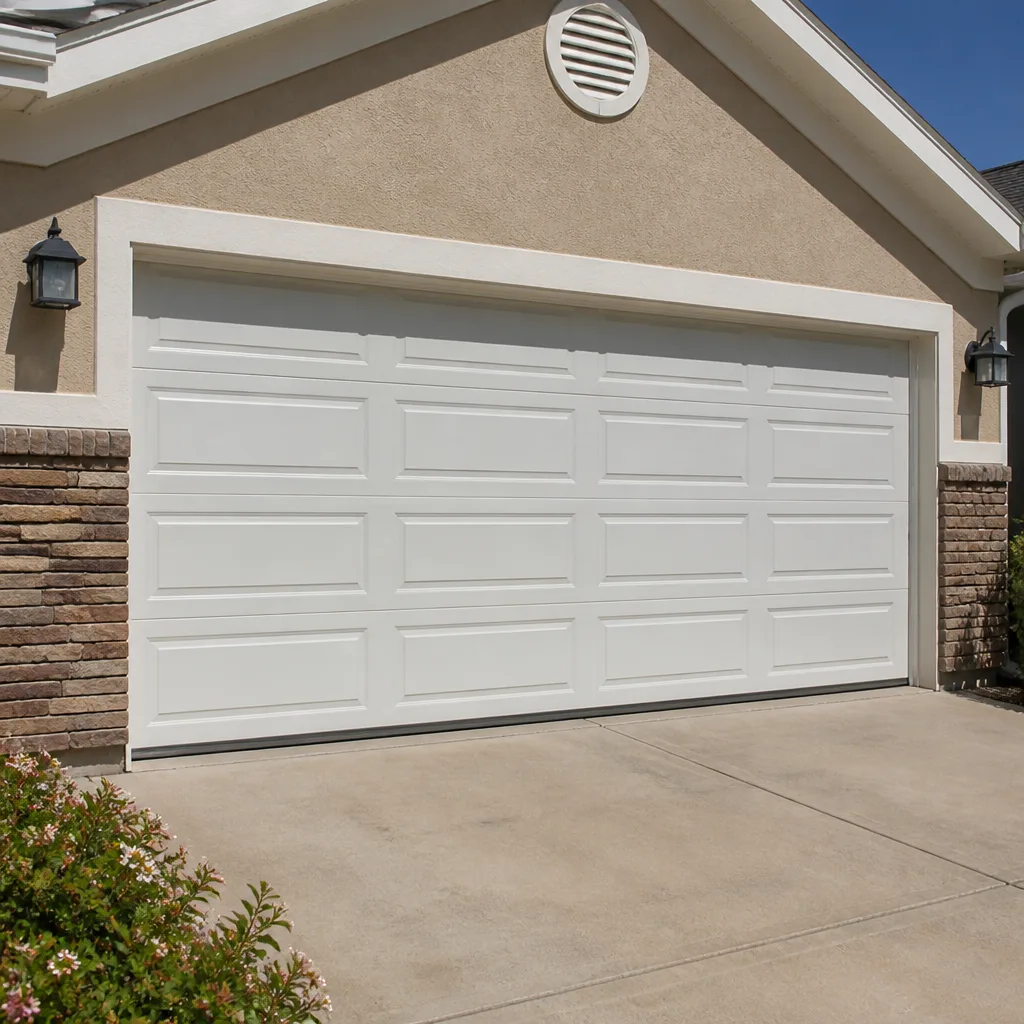 Raised-panel steel
 Carriage house
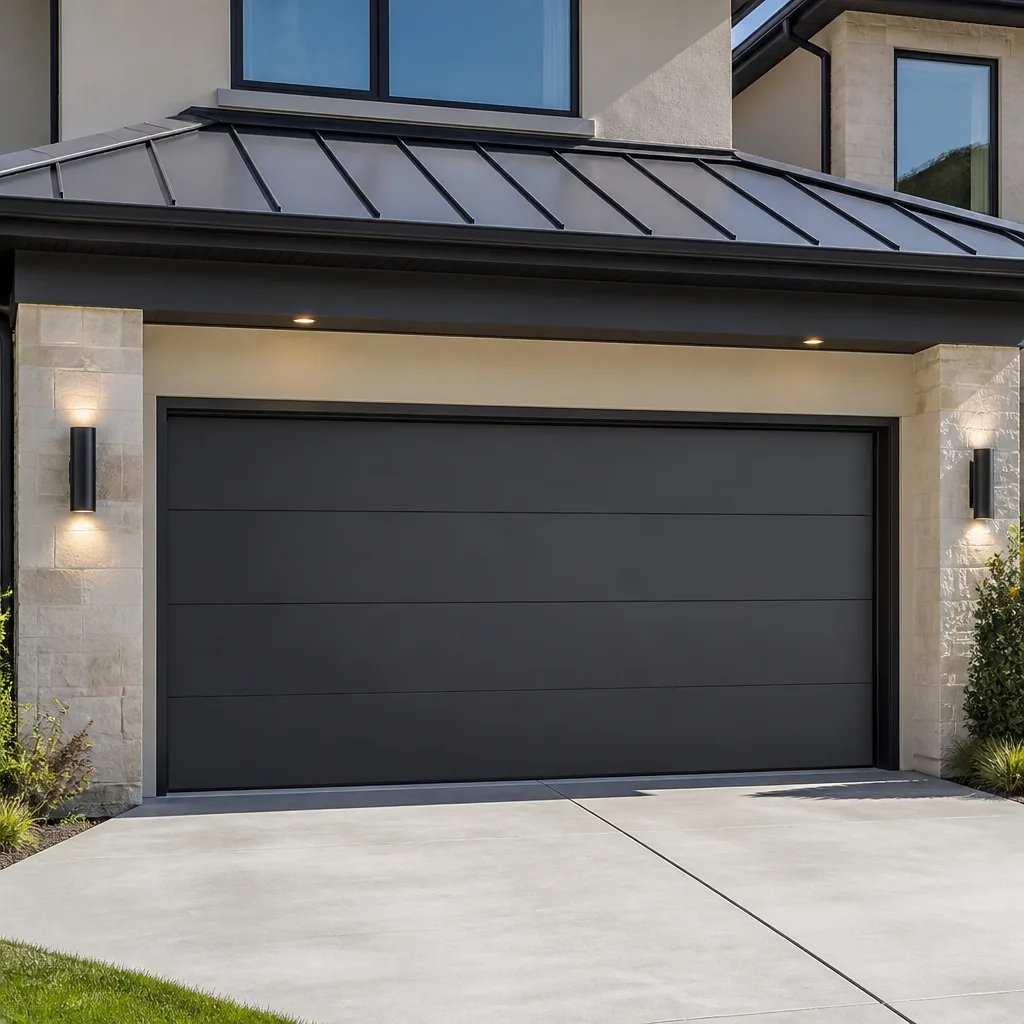 Modern flush
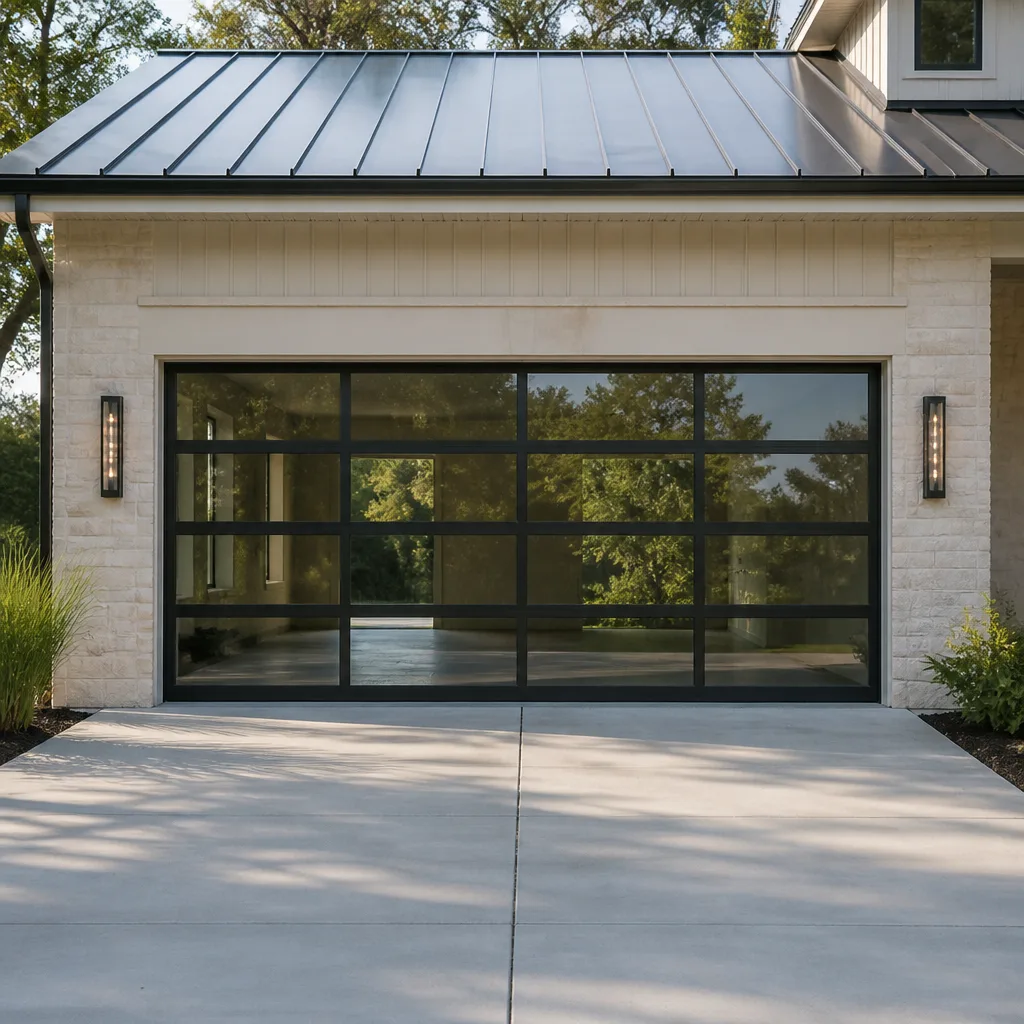 Full-view glass
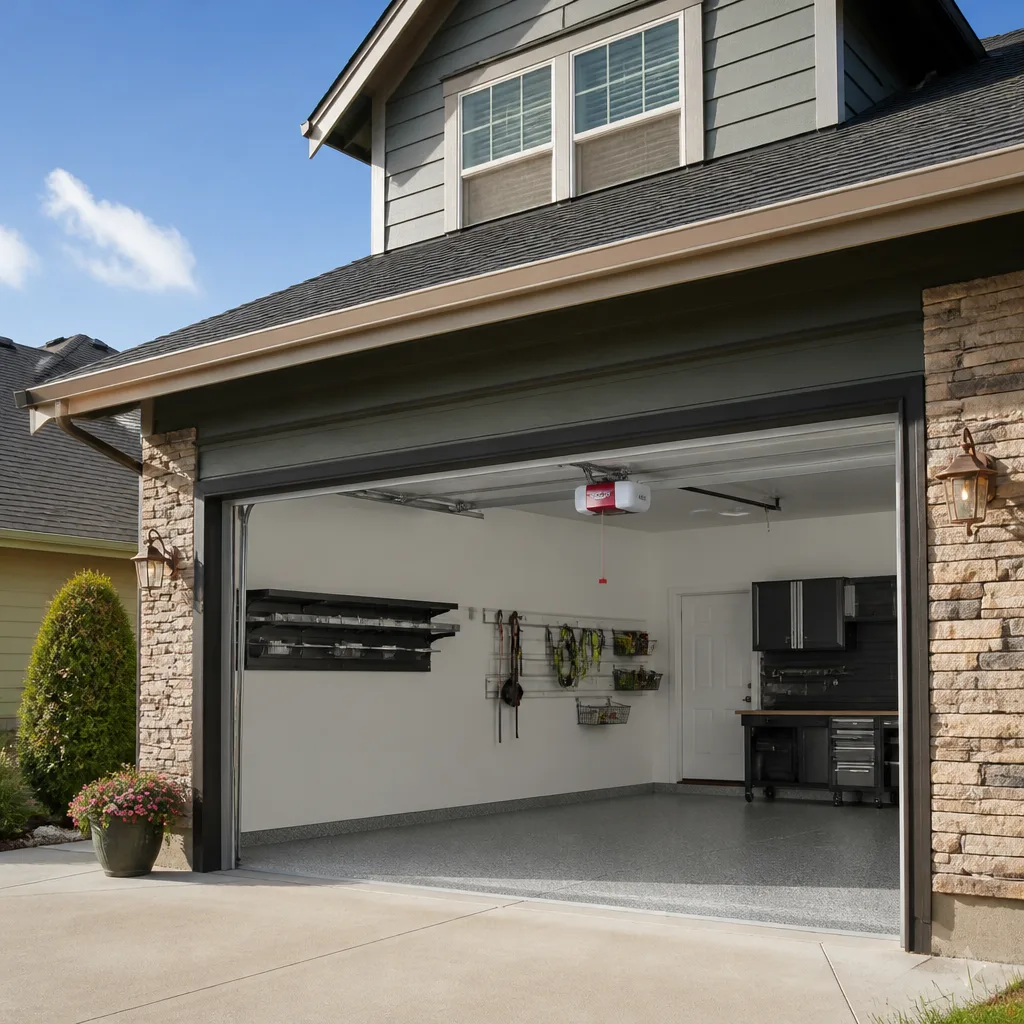 LiftMaster openers
 Chamberlain openers
Full 25-point door and opener safety check with every visit - springs, cables, rollers, tracks, and your LiftMaster or Chamberlain opener included
You get a price before we start. It does not change when the pro arrives.
Get your free estimateGarage Door Repair Maintenance Checklist for Laredo Homeowners
Most garage door maintenance advice you’ll find online was written for a national audience, and that’s the problem. Lubricant labeled for “annual application” burns off in a Laredo summer long before a year passes. A bottom seal that holds up fine in a mild climate dries and cracks here after one hot season and a monsoon or two. Heat cycling, intense UV, and months above 100°F compress the degradation timeline on springs, seals, rollers, and lubricants by months, not weeks. A generic checklist doesn’t account for any of that. This guide is built around Laredo’s actual conditions: a month-by-month schedule calibrated to our temperature peaks, the lubricants that survive the heat, and the inspection points that matter most here. Use it to catch problems before they strand your door.
Quick Answer
A Laredo garage door needs lubrication every 90 days (not annually), a bottom seal and weatherstripping check before and after monsoon season, and a monthly visual check of springs, cables, and hardware. Higher heat and UV exposure here mean every interval on a generic national checklist should be shortened. When you find something that looks worn or off, get it looked at early rather than waiting for a failure.
Styles & brands we work with
- Raised-panel steel
- Carriage house
- Modern flush
- Full-view glass
- LiftMaster openers
- Chamberlain openers
Table of Contents
- Why Laredo’s Climate Rewrites the Maintenance Calendar
- Your Month-by-Month Maintenance Schedule for Laredo
- Which Lubricants Survive 100°F+ and Which Fail
- Bottom Seal and Weatherstripping: Tied to Monsoon Season, Not Quarters
- Torsion Spring Tension Checks You Can Do Without Tools
- Opener Maintenance: What to Watch on Genie and LiftMaster Units
- The 10-Minute Monthly Walkthrough
- Standard Checklist Items That Need Shorter Intervals in Laredo
Why Laredo’s Climate Rewrites the Maintenance Calendar
Garage door manufacturers publish maintenance intervals based on average conditions across the country. Laredo isn’t average. Our summers push well past 100°F, and a metal garage door sitting in direct sun gets substantially hotter than the air around it. That heat does two things. It accelerates the breakdown of petroleum-based lubricants, and it puts springs and cables through more expansion and contraction cycles each day than the same door would see in a cooler climate.
UV exposure is the other half of the story. A south- or west-facing garage door in neighborhoods like Del Mar Hills or the Heights takes direct sun for most of the afternoon. That sun degrades rubber seals, weatherstripping, and plastic and nylon parts faster than shade-protected doors. A bottom seal that might last three years elsewhere can dry out here in a fraction of that time.
What does this mean for you as a Laredo homeowner? Every interval you’d find on a generic checklist needs to shrink. Lubrication goes from annual to every 90 days. Seal inspections go from once a year to twice a year, timed around our dry season and monsoon season. Spring and cable checks go from occasional to monthly. None of this is complicated, but it has to be built around our conditions, not someone else’s. The single most important shift: treat maintenance as something you do on a rhythm tied to heat and rain, not tied to the calendar on a manufacturer’s label.
Your Month-by-Month Maintenance Schedule for Laredo
Here’s a schedule calibrated to Laredo’s temperature peaks and rainy season, not generic seasonal categories. Treat it as a starting point and adjust for how your door is oriented and how much sun it takes.
- January – Deep clean and lubricate. Wipe down hinges, rollers, and the torsion bar, then apply a full lubrication pass. Winter is our mildest stretch, so it’s a good time to reset everything.
- February – Seal inspection. Check the bottom seal and perimeter weatherstripping for early cracking from the previous summer’s heat. Replace anything that’s stiff or split.
- March – Balance and spring check. Test the door’s balance (details below) and look at springs and cables for wear before the heat sets in.
- April – Lubrication pass #2. Rolling into warmer weather, get ahead of the burn-off with a fresh application on all moving parts.
- May – Hardware and track check. Tighten bolts, check roller condition, and confirm the tracks are straight and clear. Heat expansion can loosen things.
- June – Pre-monsoon seal and drainage check. Inspect the bottom seal against the floor and confirm the threshold sheds water. This is the one that keeps rain out.
- July – Lubrication pass #3. Peak heat. Petroleum-based lubricants are burning off fastest right now; reapply and check for any residue that’s gone dry.
- August – Post-storm inspection. After monsoon rains, check the seal, the floor line, and the opener’s safety reversal. Address any water intrusion quickly.
- September – Opener check. Test the safety sensors, force settings, and battery backup. Listen for unusual sounds from the motor.
- October – Lubrication pass #4. The fourth 90-day cycle of the year. Reapply on all moving parts.
- November – Full hardware review. Look at every hinge, roller, bracket, and cable for wear after the hot season. Tighten and replace as needed.
- December – Year-end safety test. Run through the complete safety checklist: balance, reversal, and sensor function. Note anything that needs attention for the spring.
If you’d rather not track twelve months yourself, the four lubrication passes (January, April, July, October) are the minimum rhythm to hold. In our experience, doors that get that quarterly attention outlast doors that get one annual pass by a wide margin. For a full repair once something’s already worn out, see our garage door repair page.
Which Lubricants Survive 100°F+ and Which Fail
The single biggest gap between generic advice and Laredo reality is lubricant choice. Most manufacturers recommend annual application assuming moderate temperatures. In Laredo, a petroleum-based spray will evaporate, gum up, or leave a dry residue well before a year is out. High temperatures thin and burn off those products faster than the manufacturer’s label anticipates.
What works here: silicone-based lubricants and white lithium grease on the moving parts. Silicone stays effective across a wide temperature range and doesn’t attract the dust that blows around South Texas. White lithium grease holds up well on hinges, rollers, and the torsion bar and stays put under heat. What fails here: thin general-purpose oils that run off quickly, WD-40-style penetrants used as a lubricant (they’re solvents, not long-term lubricants), and anything labeled only for “annual application.” Those products aren’t bad, they’re just not rated for our conditions.
Application matters too, and a few rules keep you out of trouble:
- Apply to hinges, rollers, and the torsion bar – the moving metal parts.
- Never lubricate the inside of the tracks; that gums them up and slows the door.
- Wipe off excess; too much attracts dust and grit.
- Never apply lubricant to springs or cables as a fix for noise – those are load-bearing and a pro should look at them.
- Reapply every 90 days in Laredo, not annually.
We work on LiftMaster, Chamberlain, Genie, Clopay, Amarr, Wayne Dalton, Craftsman, and Raynor equipment, and the lubricant guidance is the same regardless of the brand on your door. The climate, not the label, sets the schedule.
Bottom Seal and Weatherstripping: Tied to Monsoon Season, Not Quarters
Laredo’s rainy season is what should drive your seal inspection calendar, not the four quarters. The bottom seal is the rubber strip along the bottom edge of the door, and the weatherstripping is the material around the sides and top. Both keep out rain, dust, and pests, and both take a beating from heat and sun.
Time your two main inspections around the rain. Do one thorough check in late spring, just before monsoon season arrives, and a second right after the heaviest stretch passes. During the pre-monsoon check, look for cracks, stiffness, and gaps between the seal and the floor. During the post-monsoon check, look for water that got past the seal, dampness at the floor line, and any splitting caused by the rains.
Concrete signs the seal needs replacing in Laredo:
- The rubber is stiff or brittle rather than pliable.
- You can see daylight under the door with it closed.
- Water stains or dampness appear along the inside of the door after rain.
- The seal has flattened where it meets the floor.
- There are visible cracks, splits, or chunks missing.
A failing bottom seal lets in rain and summer heat, and it lets cool air out, which you’ll feel on the electric bill. It also lets in dust and insects. Seals are inexpensive and quick to swap, and catching them before monsoon season saves you a wet garage floor. If your door’s overall condition has declined past what maintenance can fix, an install may make more sense; our Garage Door Repair Laredo team can help you weigh it.
Torsion Spring Tension Checks You Can Do Without Tools
Torsion springs carry the weight of the door, and in Laredo’s heat they cycle more each day than they would in a cooler climate, so they wear faster. You can’t safely test spring tension by touching or adjusting the springs, but you can assess how they’re performing through the door itself. Here’s how to read the concrete signs without tools.
- The balance test. Disconnect the opener, raise the door halfway by hand, and let go. A healthy door holds roughly where you leave it. A door that drops on its own or drifts up has a spring problem.
- The lift test. With the opener disconnected, lift the door by hand. It should feel manageable. If it’s heavy and hard to raise, the springs aren’t doing their job.
- The sound test. Listen for a loud bang from the garage, or a door that suddenly won’t open – common signs of a broken spring. A broken spring is an emergency; don’t keep running the opener against it.
- The visual check. Look at the springs for visible gaps or separation (a broken torsion spring shows a clear split). Look at the cables for fraying, looseness, or slack.
Here’s the safety caveat, and it’s the most important one in this guide. Torsion springs and cables are under extreme tension and can cause serious injury if you try to adjust or replace them yourself. Don’t try to tighten, wind, or remove a spring. Leave that work to a trained professional. What you can do is recognize the signs above and stop using the door until it’s inspected. If you’re seeing any of these signals, our Laredo team can come take a look and tell you honestly whether repair or replacement makes more sense.
Opener Maintenance: What to Watch on Genie and LiftMaster Units
An opener has a diagnosis, not just a symptom, and in Laredo’s heat the opener takes its own kind of wear. Whether you have a Genie, LiftMaster, Chamberlain, or Craftsman unit, the maintenance basics are similar, but the heat makes a few things more important.
Once a month, run these checks:
- Safety sensors: Make sure both sensors at the door base have a clear line of sight and aren’t blocked by dust or debris. Test by holding something in the door’s path while closing (the door should reverse).
- Force settings: The opener should close the door smoothly and reverse on contact with a low force setting. If the opener strains or the door stalls, that’s a sign of force-setting or door-balance trouble.
- Battery backup: If your opener has one, confirm it’s holding a charge – our grid isn’t perfect, and a door that won’t open in an outage is a security concern.
- Motor sound: A grinding, squealing, or straining motor means something’s off. Catch it before it fails.
- Lights and limits: Confirm the opener’s travel limits are correct: the door should open fully and close flush without straining. Re-set limits if needed (via the opener’s manual).
Heat affects the opener’s internals too – lubricant inside the unit can thin, and motors run harder when the door’s balance has slipped. If your opener is acting up, our garage door opener repair page covers what we handle. Because we specialize in openers rather than treating them as an afterthought, we can usually tell what’s wrong faster than a generalist who works on everything.
The 10-Minute Monthly Walkthrough
Most of the problems we see in Laredo could have been caught in a ten-minute once-a-month walkthrough. Schedule it – set a reminder on your phone for the first of each month – and run through this list in order. Keep the door closed and disconnected from the opener for the inspection parts.
- Walk around the door and look. Check the panels for dents, rust, or heat damage, and check the frame for any separation or looseness.
- Look at the tracks. Are they straight? Is anything bent, dented, or loose? Are they clear of debris?
- Check the hardware. Look at hinges, rollers, brackets, and bolts. Tighten anything loose (hand-tight, don’t overdo it), and note worn or broken rollers for replacement.
- Inspect springs and cables from a distance. Look for gaps in springs, fraying on cables, or slack. If anything looks wrong, stop and call.
- Test the balance by hand. Disconnect the opener, raise the door halfway, and let go. It should hold.
- Check the seals. Look at the bottom seal and perimeter weatherstripping for cracks or gaps.
- Reconnect the opener and test the safety sensors. Block the beam and confirm the door reverses.
- Listen. Open and close the door once and listen for grinding, scraping, or straining you didn’t hear last month.
If you do this monthly, you’ll spot problems while they’re still small. If you’d rather hand it off, a specialist can run through the full list and tell you what needs attention – and what doesn’t.
Standard Checklist Items That Need Shorter Intervals in Laredo
A lot of the maintenance advice that’s perfectly sound for a national audience is too relaxed for Laredo. The tasks are the same; the intervals are shorter. Here’s where the gap is biggest.
- Lubrication. Annual on most national checklists; every 90 days here because heat burns off the product.
- Bottom seal inspection. Once a year elsewhere; twice a year here, tied to monsoon season.
- Spring and cable checks. Occasional; monthly here, because heat cycling shortens spring life.
- Roller condition. Annual; every 3-6 months here, since grit and heat wear nylon faster.
- Opener force and limit checks. Yearly; quarterly here, because heat and balance changes affect the opener sooner.
- Track and hardware tightening. Annual; quarterly here, because heat expansion loosens bolts.
- Full professional inspection. Every couple of years; annually here, given the compression of wear.
Think of it this way: Laredo conditions effectively double the wear and halve the interval on every moving part and every rubber seal. The tasks don’t change, the frequency does. Doors from Clopay, Amarr, Wayne Dalton, and Raynor all follow the same logic here: the system is what it is, but the climate sets the schedule.
Common Mistakes to Avoid
- Following a national checklist on a national timeline. That “annual lubrication” label was written for average conditions. In Laredo, following it means your moving parts run dry for months.
- Using a thin petroleum spray or WD-40 as a lubricant. It thins and burns off in our heat, and it does more harm than good once it’s gone. Use silicone or white lithium.
- Lubricating the tracks. We see this often, and it gums up the tracks so the door drags. Keep lubricant on the moving parts, not the rails.
- Skipping the pre-monsoon seal check. A dried, cracked bottom seal lets in the first serious rain of the season. Time your inspection before the storms, not after.
- Running a door with a broken spring or a fraying cable. That turns a small repair into a bigger one, and it’s a safety risk. Stop and get it looked at.
- Trying to adjust springs or cables. Those are under high tension. A homeowner can inspect and recognize signs, but the work belongs to a trained professional.
- Ignoring a heavy door or a straining opener. It usually means spring tension has slipped or the opener’s force setting is off, and the strain will spread to other parts if it’s left alone.
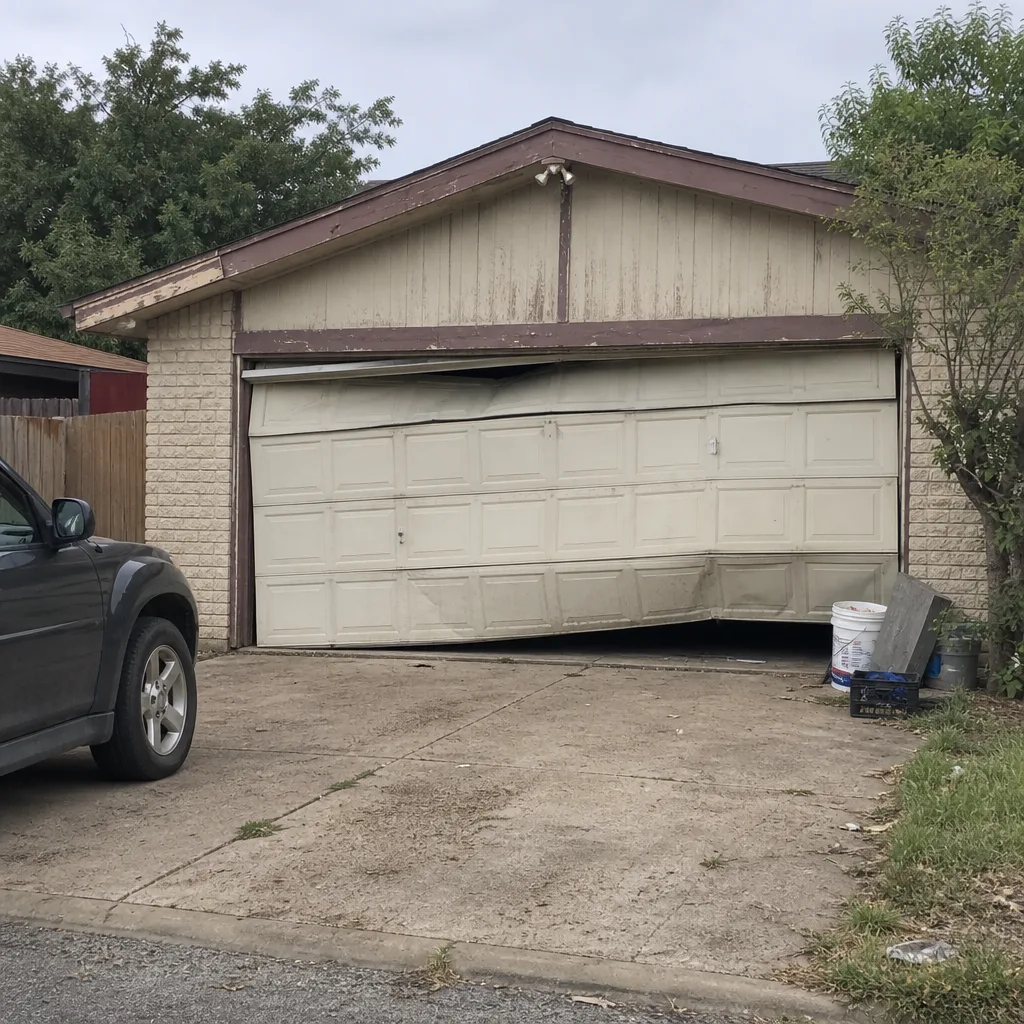
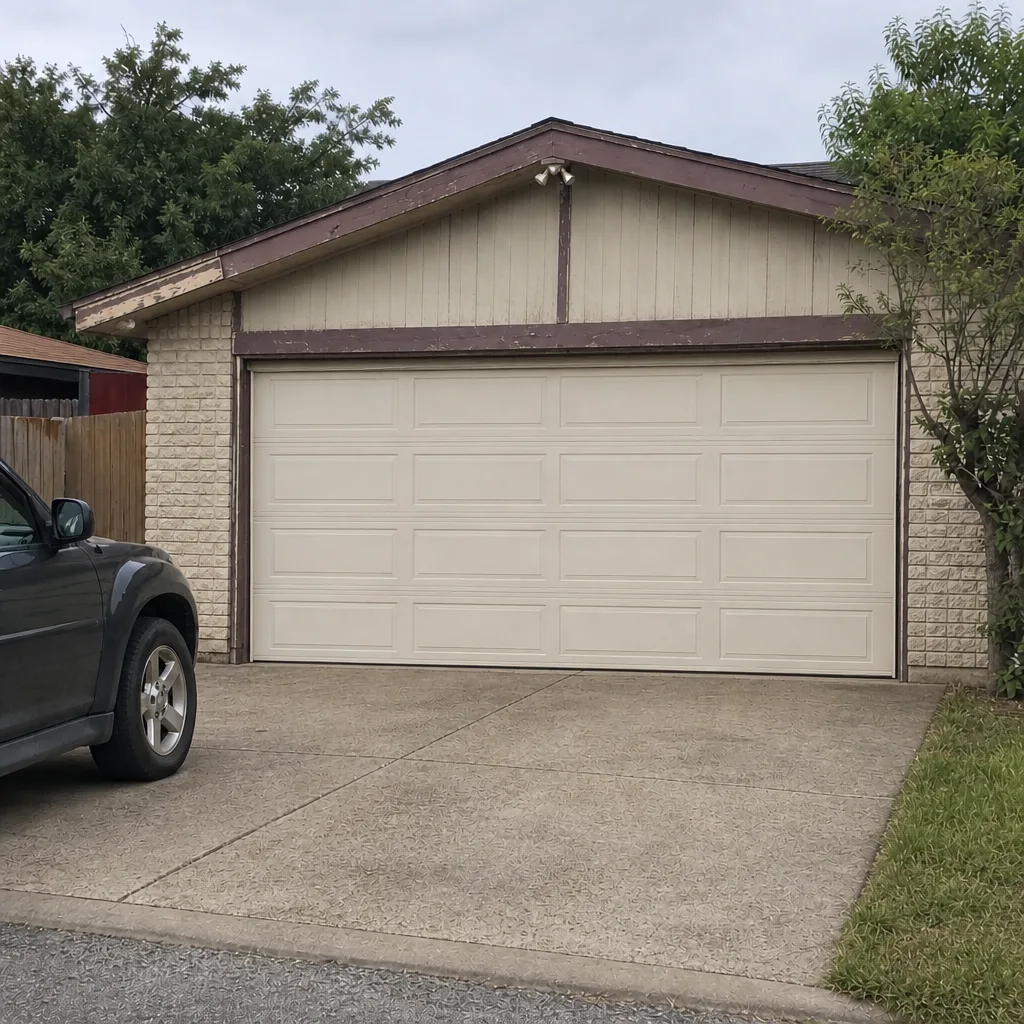
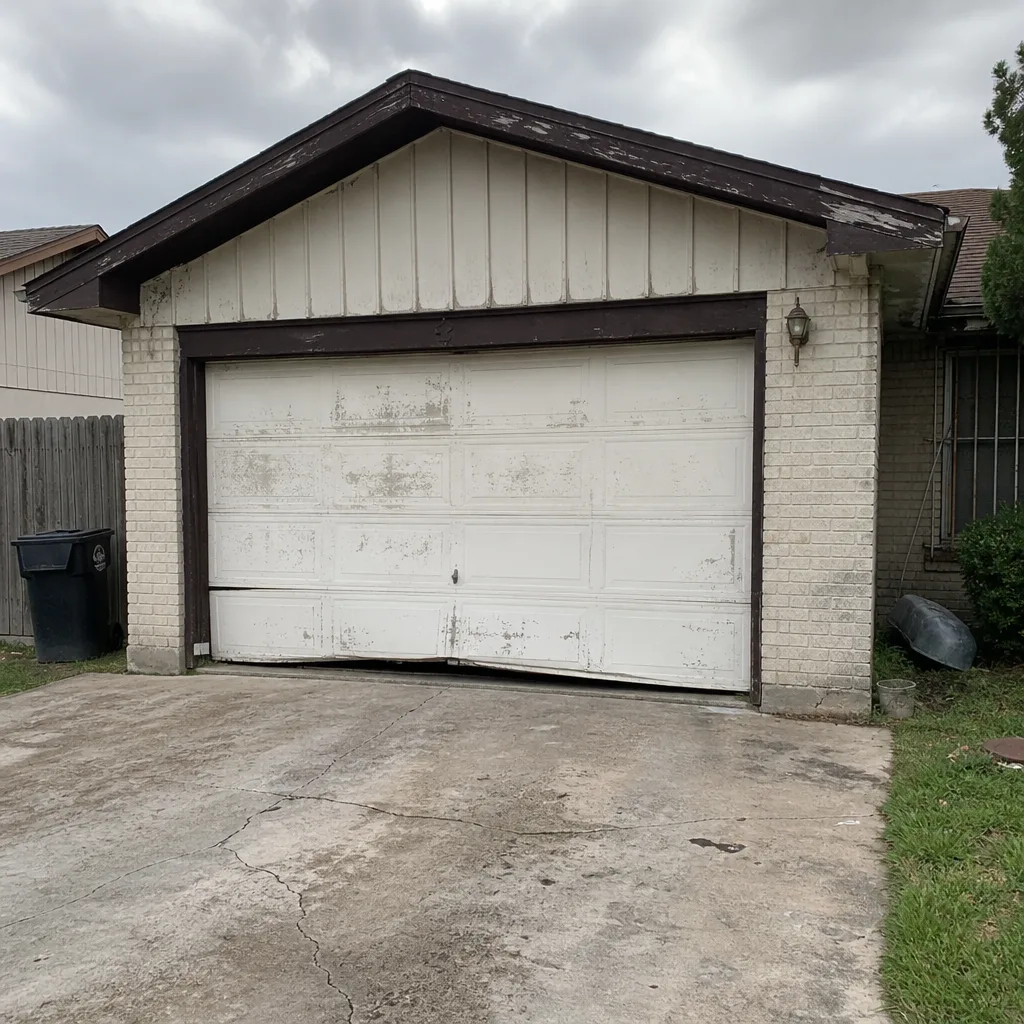
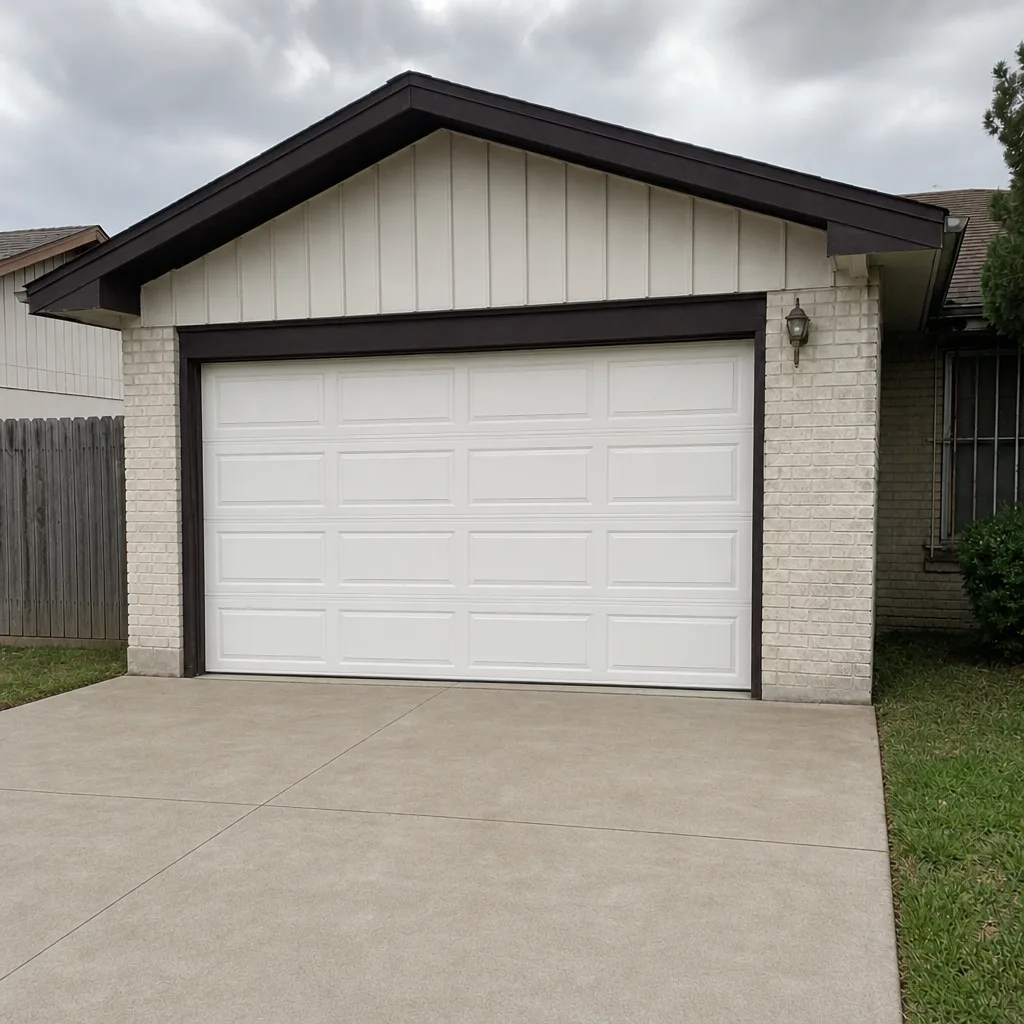
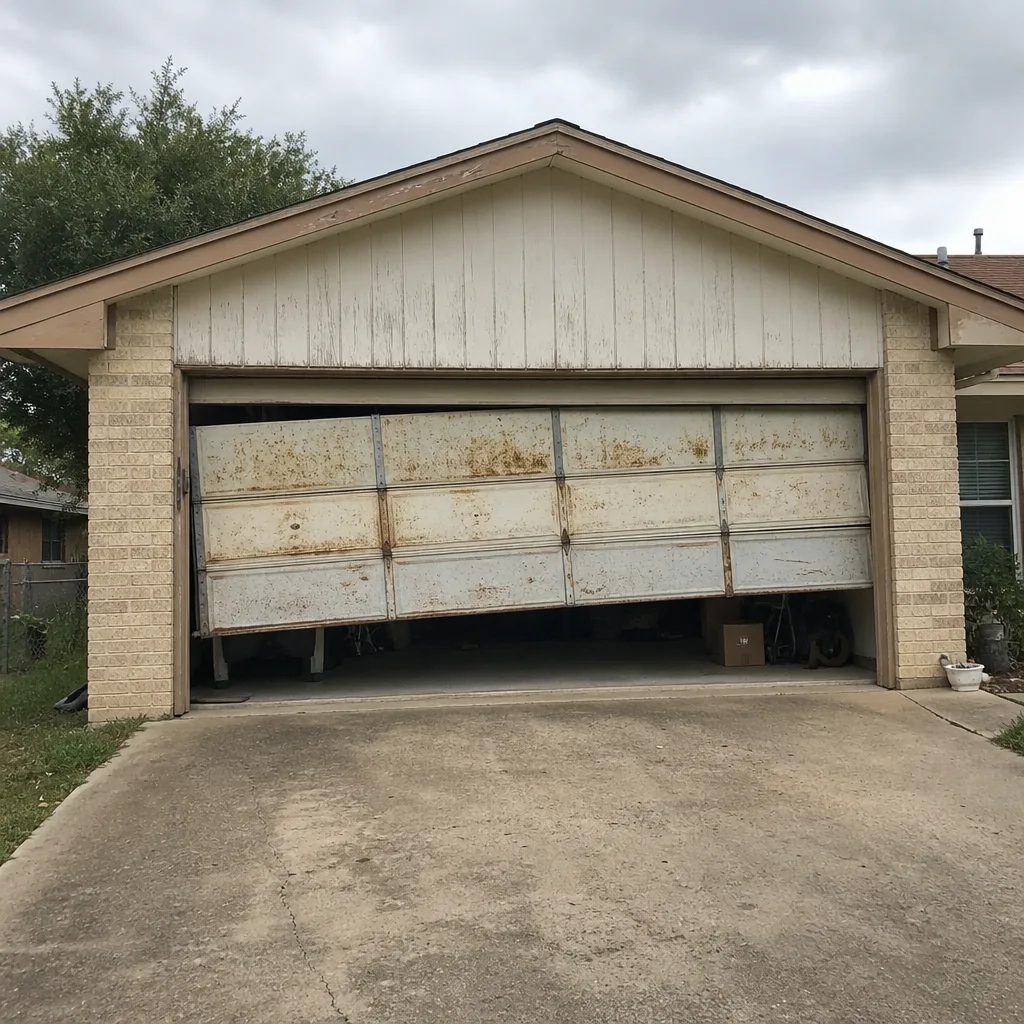
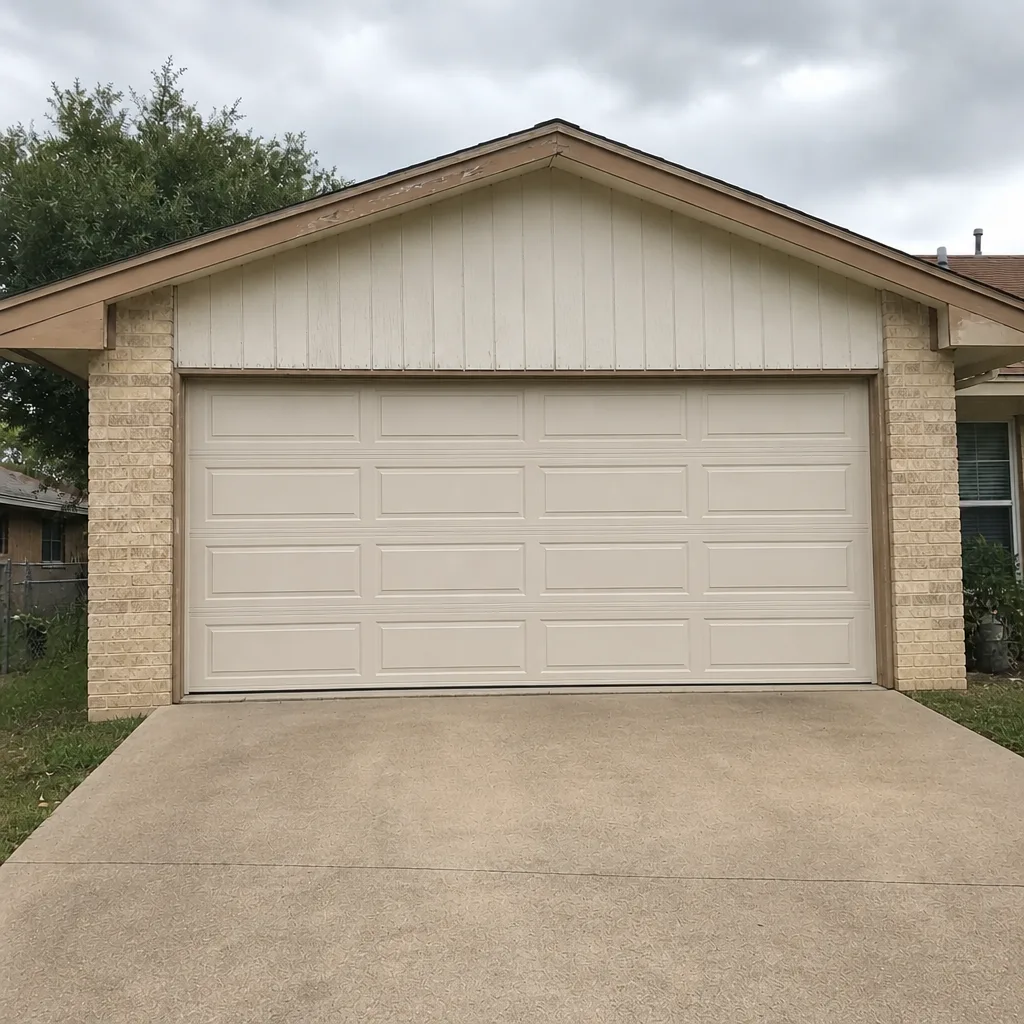
See the difference
 Before
 After
 Before
 After
 Before
 After
When to Call a Professional
Some jobs are simple: wiping down hardware, reapplying lubricant, checking seals, and testing sensors. Others are dangerous or need the right diagnosis. Call a professional when you see a broken spring, a frayed or slack cable, a door that drops on its own, a door that’s become too heavy to lift by hand, or a door off its tracks. Those are the cases where continuing to run the door risks injury or more damage. Call us for a binding or dragging door, an opener that grinds, strains, or reverses when it shouldn’t, or a full inspection you’d rather not do yourself. Garage Door Repair Laredo offers free estimates in Laredo – call (855) 360-7055. Our technicians have up to 14 years of experience, and because we specialize in garage doors and openers, we can tell you what’s going on and what to do about it.
Frequently Asked Questions
Every 90 days. In Laredo’s heat, petroleum-based lubricants burn off well before the annual schedule most manufacturers recommend, so a quarterly pass with silicone or white lithium keeps the moving parts protected. If it’s been more than a few months, get a fresh application on hinges, rollers, and the torsion bar now.
A door that’s become heavy and hard to lift by hand, or one that won’t hold its position when you raise it halfway and let go. A loud bang from the garage or a sudden refusal to open are signs of an actual break. If you see any of these, stop using the door and call (855) 360-7055 – estimates are free.
If the rubber is stiff or brittle rather than pliable, if you see daylight under the door, or if there are cracks and splits, it’s time to replace it. Time your inspection just before monsoon season so a failing seal doesn’t let in the first big rain. Call (855) 360-7055 for an exact quote.
Yes. Heat can thin the lubricant inside the unit and make the motor work harder, especially when the door’s balance has slipped. Check the force settings, listen for grinding or straining, and test the safety sensors monthly. If your opener is acting up, call (855) 360-7055.
Once a year. Heat cycling and UV exposure here compress the wear timeline, so an annual professional look catches things a homeowner can miss. Call (855) 360-7055 to book one – estimates are free.
No. We quote and agree the price before any work starts, and that written estimate is what you pay. Call (855) 360-7055 for an exact quote.
The Bottom Line
Garage door maintenance in Laredo isn’t about a longer checklist; it’s about shorter intervals and products built for the heat. Lubricate every 90 days with silicone or white lithium. Inspect your seals twice a year, timed to monsoon season. Check springs, cables, and the opener monthly, and never adjust a spring yourself. These are the shifts that make a real difference here, where heat and sun compress the wear timeline on every moving part. If any sign points to a repair, get it looked at early. We offer free estimates in Laredo, and we tell you honestly whether repair or replacement makes sense. Call (855) 360-7055. We answer 24/7. Fast dispatch from 7am to 7pm, Sunday through Friday.
Written by the team at Garage Door Repair Laredo.